



Compare locomotives
Add a locomotive
London, Chatham & Dover classes M, M1 and M2
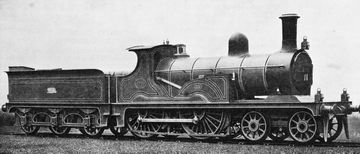
For the heaviest of the boat trains between London and Dover, William Kirtley designed the class M, of which six were built by Neilson & Co. in 1877. Two further orders had to be placed in part with the company's own ...
| London, Chatham & Dover classes M, M1 and M2Remove | |
|---|---|
| Variant | |
| Built | 1877 |
| Manufacturers | Neilson & Co. |
| Wheel arrangement | 2B |
| Gauge | 1435 mm |
| Length | |
| Service mass | 44503 kg |
| Top speed | |
| Power | |
| Engine |
General
| Property | London, Chatham & Dover classes M, M1 and M2Remove |
|---|---|
| Built | 1877 |
| Manufacturers | Neilson & Co. |
| Wheel arrangement | 4-4-0 (American) |
| Gauge | 1,435 mm |
Dimensions and weights
| Property | London, Chatham & Dover classes M, M1 and M2Remove |
|---|---|
| Wheelbase | 6.41 m |
| Service mass | 44.5 t |
| Adhesion mass | 28.4 t |
| Total mass | 77 t |
| Rigid wheelbase | 2.54 m |
| Axle load | 14.2 t |
| Water capacity | 11,591 l |
| Fuel capacity | 4.1 t (coal) |
Boiler
| Property | London, Chatham & Dover classes M, M1 and M2Remove |
|---|---|
| Grate area | 1.514 m² |
| Firebox surface | 9.941 m² |
| Tube heating surface | 89.373 m² |
| Evaporative heating surface | 99.313 m² |
| Total heating surface | 99.3 m² |
Power plant
| Property | London, Chatham & Dover classes M, M1 and M2Remove |
|---|---|
| Driver diameter | 1,981 mm |
| Boiler pressure | 9.7 bar |
| Expansion type | simple expansion |
| Cylinders | two, 444 x 660 mm |
Power
| Property | London, Chatham & Dover classes M, M1 and M2Remove |
|---|---|
| Power source | steam |
| Estimated power | 298 kW (405 PS) |
| Starting effort | 54.0 kN |
Calculated values
| Property | London, Chatham & Dover classes M, M1 and M2Remove |
|---|---|
| Factor of adhesion | 1 : 5.16 |
| Optimal speed | 34 km/h |
| Power-to-weight ratio | 6.7 kW/t |
| Heating Surface Equivalent | 149.0 m² |
| Cylinder volume/HSE | 1 : 1,375.40 |
| Adhesive weight/Total | 1 : 1.56 |
| Tractive force/Heating surface | 1 : 11.36 |
| Grate area/Heating surface | 1 : 65.60 |
| Firebox/Tube surface | 1 : 8.99 |