


Compare locomotives
Add a locomotive
London & North Western Webb Experiment class
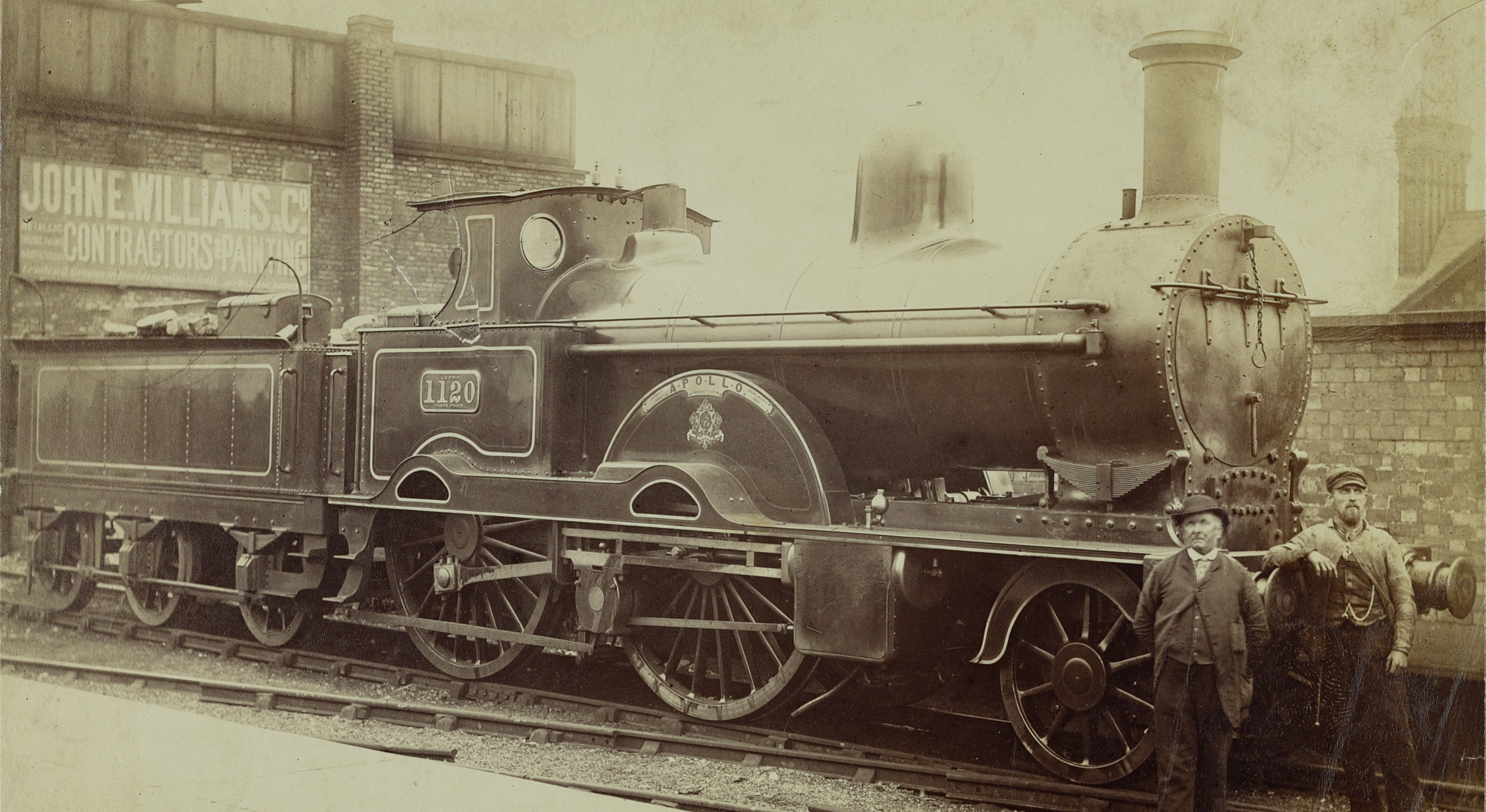
In 1881, Francis Webb started to design an express locomotive without coupling rods for better running characteristics at speed. He created a three-cylinder compound system that used two very small high pressure cylin...
General
| Property | London & North Western Webb Experiment classRemove |
|---|---|
| Built | 1882-1884 |
| Manufacturers | Crewe |
| Wheel arrangement | 2-2-2-0 (Webb Compound) |
| Gauge | 1,435 mm (Standard gauge) |
Dimensions and weights
| Property | London & North Western Webb Experiment classRemove |
|---|---|
| Wheelbase | 5.36 m |
| Rigid wheelbase | 2.52 m |
| Service weight | 38.4 t |
| Adhesive weight | 28.7 t |
| Axle load | 15.7 t |
| Total weight | 63.8 t |
| Water capacity | 7,912 l |
Boiler
| Property | London & North Western Webb Experiment classRemove |
|---|---|
| Grate area | 1.589 m² |
| Firebox surface | 9.615 m² |
| Tube heating surface | 91.092 m² |
| Evaporative heating surface | 100.707 m² |
| Total heating surface | 100.7 m² |
Power plant
| Property | London & North Western Webb Experiment classRemove |
|---|---|
| Driver diameter | 1,981 mm |
| Boiler pressure | 10.3 bar |
| Expansion type | compound |
| Cylinders | three, HP: 330 x 610 mm and LP: 660 x 610 mm |
Power
| Property | London & North Western Webb Experiment classRemove |
|---|---|
| Power source | steam |
| Estimated power | 317 kW (431 PS) |
| Starting effort | 35.4 kN |
| Starting effort simple | 42.5 kN |
Calculated values
| Property | London & North Western Webb Experiment classRemove |
|---|---|
| Factor of adhesion | 1 : 6.63 |
| Optimal speed | 55 km/h |
| Power-to-weight ratio | 8.3 kW/t |
| Heating Surface Equivalent | 148.8 m² |
| Cylinder volume/HSE | 1 : 1,578.89 |
| Adhesive weight/Total | 1 : 1.34 |
| Tractive force/Heating surface | 1 : 8.81 |
| Grate area/Heating surface | 1 : 63.38 |
| Firebox/Tube surface | 1 : 9.47 |