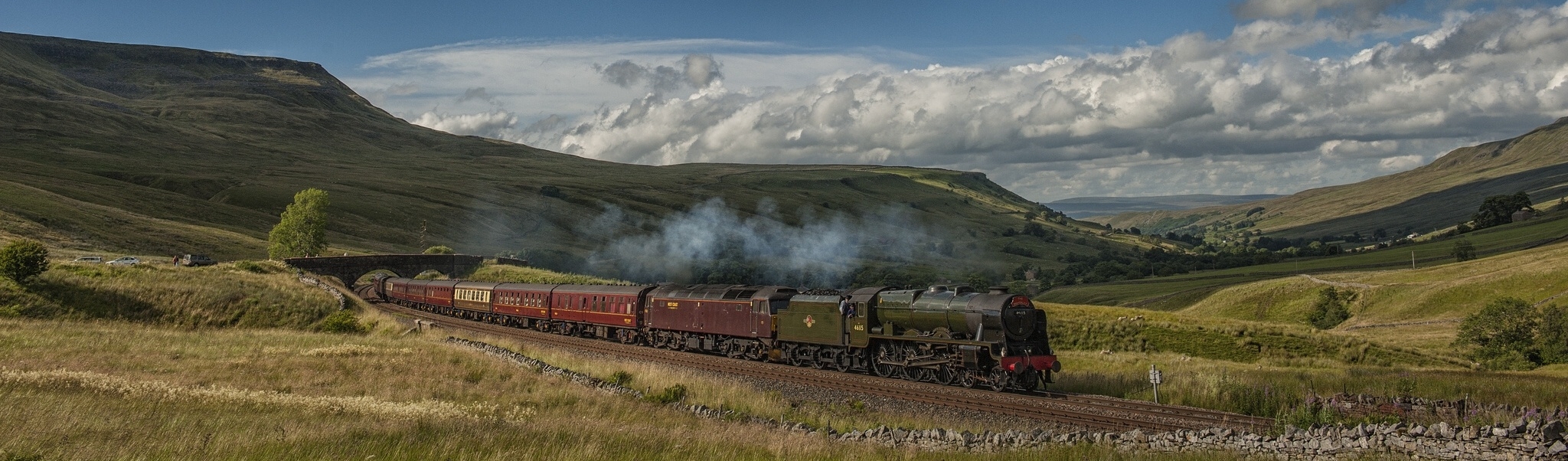
The T 3 was a small tank locomotive of the Royal Württemberg State Railways with three coupled axles and no carrying axles. In terms of size, weight and performance, it can be roughly compared to the Prussian T 3 of the same name. Since old, rebuilt locomotives were used for shunting in Württemberg and the T 3 was primarily developed for branch lines and as a pusher locomotive for ramps such as the Geislinger Steige. Production first took place at Krauss in Bavaria from 1891, but shortly thereafter, locomotives from Esslingen machine factory and, for the last series, from the Heilbronn machine building company also followed.
Later batches deviated from the first locomotives to eliminate deficiencies or to improve suitability for specific types of lines. At times, some of the locomotives ran without a coupled third axle, i.e. with 0-4-2 wheel arrangement, in order to improve the running properties of individual sections with radii of up to 100 meters. However, since this design could not be regarded as a permanent solution, four locomotives were built with a Klose bogie, which were designated T 3 L. However, since this variant was very expensive to maintain, no further locomotives were built. Of all the variants, these were the earliest to be phased out, by 1927.
In later series of the T 3, the problem of the water tank being too small for line use was addressed. The latter were immediately pulled so far forward that they ended with the smoke box at the front. This also had the advantage of increasing the adhesive weight by a few tonnes. The coal supplies were still in front of the driver's cab above the boiler and the left water tank so as not to restrict the driver's view.
The majority of the 114 locomotives built were taken over by the Reichsbahn in 1925 as class 893-4. After the T 3 L was decommissioned after a short time, as already mentioned, the remaining locomotives only remained in use until 1945 at the latest. This could be due to the fact that a comparable model, the Prussian T 3, remained in service in large numbers.