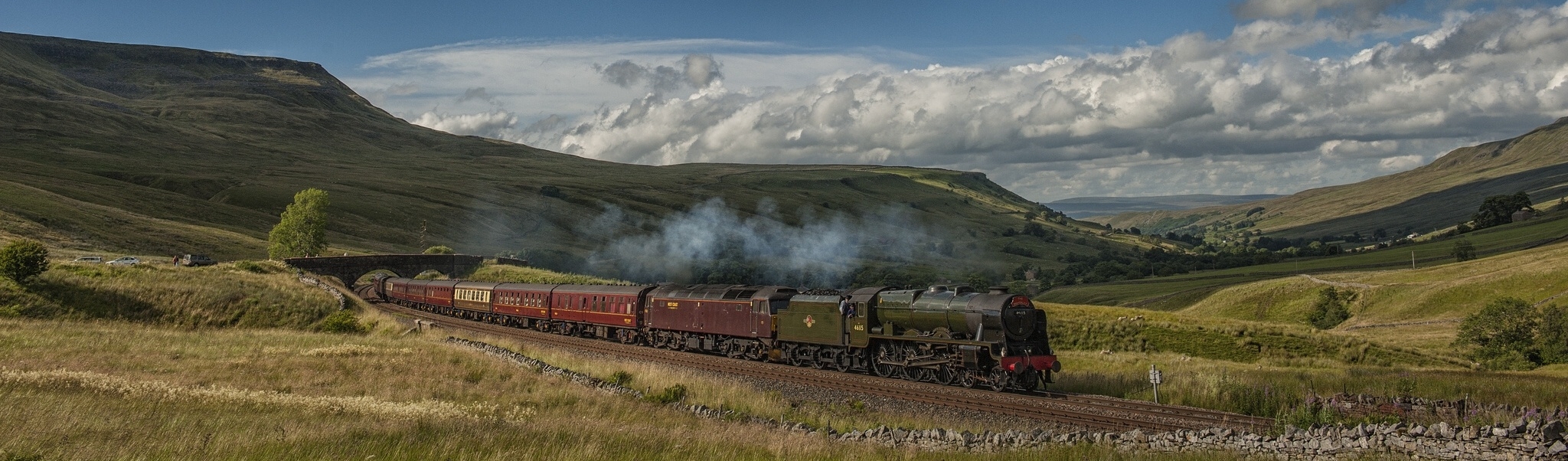



British Rail class 28 and Metropolitan-Vickers type 2
originally D5700

In order to be able to test two-stroke diesels as part of the British Railways' modernization plan, the class 28 with the Crossley HST was ordered from Metropolitan-Vickers. This had eight cylinders in V-shape and exhaust pulse pressure charging. This engine had already been used in the Irish class A and the WAGR class X. What was special was the asymmetrical underframe with a two- and a three-axle bogie, which led to the Co-Bo wheel arrangement.
The class 28 got the nicknames “Metrovicks”, “Crossleys” and “Co-Bos”. One problem was the windows in the driver's cab falling out, which could be resolved. However, the engines caused bigger problems. In addition to excessive exhaust plumes, this was primarily due to insufficient reliability, which led to many failures. That's why they were often used double headed so that they could continue running if one locomotive failed. Like other British diesel locomotives with non-standard engines, they were retired between 1967 and 1968.
Technical data
General
- Built
- 1958-1959
- Manufacturers
- Metropolitan-Vickers
- Wheel arrangement
- C-B
- Gauge
- 1,435 mm (Standard gauge)
Dimensions and weights
- Length
- 17.26 m
- Wheelbase
- 13.03 m
- Service mass
- 98.6 t
- Adhesion mass
- 98.6 t
- Axle load
- 20.8 t
Power plant
- Engine
- Crossley HST
- Engine type
- V8 diesel
Power
- Power source
- diesel-electric
- Indicated power
- 895 kW (1,217 PS)
- Top speed
- 121 km/h
- Starting effort
- 222.4 kN
Calculated values
- Factor of adhesion
- 1 : 4.35
- Power-to-weight ratio
- 9.1 kW/t
- Adhesive weight/Total
- 1 : 1.00