Banner
Navigation

Navigation

loco-info.com
The reference for locomotives and railcars

Great Northern (UK) class K

London & North Eastern classes Q1, Q1s and Q2

Great Britain 1901 55 produced
Locomotive Magazine, June 1901

To haul heavy coal trains from Peterborough to London, Ivatt developed the class K, which was soon dubbed the “Long Tom” because of its longer boiler compared to the six-coupled locomotives. The dimensions of this boiler roughly corresponded to the class 990 or C1 (small boiler) Atlantics. It could generate enough power to haul 60 full wagons of coal. This corresponded to a train weight of 1,052 tons compared to 681 tons for the older, six-coupled freight locomotives. With the cylinder dimensions required for this, it was still possible to arrange the cylinders within the frame. From 1901 a total of 55 engines were built.

Although the engines could handle the required train weights without any problems, a high coal consumption was noticeable. Therefore, from 1908 almost all engines were superheated, with two different variants being created. The first one, later designated by the LNER as the Q1s class, retained the original cylinder dimensions and slide valves. The others, which later became LNER class Q2, used cylinders with a diameter of 21 instead of 20 inches and piston valves instead of slide valves. Both variants had Schmidt-type superheaters and both had the fully automatic Klinger-type lubrication required for superheated operation.

In 1913 number 445 was fitted with the Doncaster superheater developed by Gresley. No other engines with this superheater followed. From 1923, it was listed as class Q3 by the LNER due to its different power characteristics. In 1914, number 420 was fitted with a significantly larger boiler. Since the other boilers of this type were finally used for the 2-6-0 machines of class K2, the 420 remained a one-off.

In the 1920's the superheaters were replaced with the Robinson type which were standard on the LNER. With the introduction of the 2-8-0 locomotives of classes O1 and O2, the locomotives were no longer needed for transporting coal to London and were increasingly used in more northerly areas. During this time they were nicknamed “Sea Pigs” because of their high water consumption compared to other locomotives. From 1926 the retirement began, whereby the few locomotives with saturated boilers were affected first. By 1935 all Q1s and Q2s were gone and the only Q3 lasted until 1937.
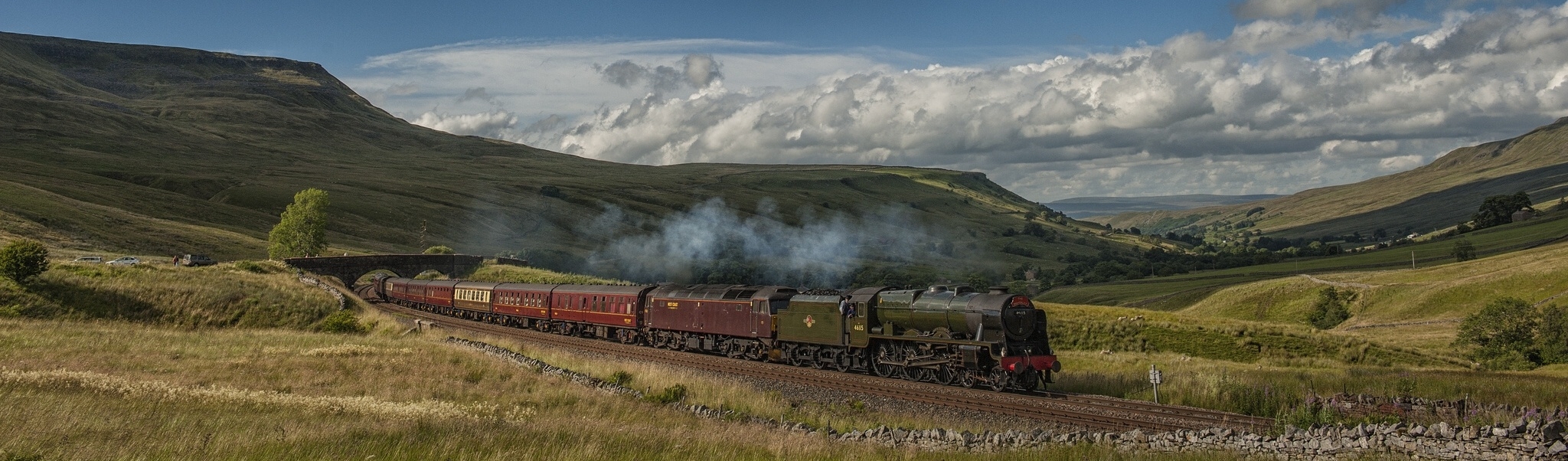
No. 420 with bigger boiler Locomotive Magazine, December 1918

Technical data

General

Property as built rebuilt Q1s rebuilt Q2 rebuilt No. 420
Built 1901-1909 1908-1920 1914
Manufacturers Doncaster
Wheel arrangement 0-8-0 (Eight-coupled)
Gauge 1,435 mm (Standard gauge)

Dimensions and weights

Property as built rebuilt Q1s rebuilt Q2 rebuilt No. 420
Wheelbase 12.60 m
Service mass 55.5 t 56.6 t 59.2 t 61.4 t
Adhesion mass 55.5 t 56.6 t 59.2 t 61.4 t
Total mass 97 t 98.2 t 103 t 105.2 t
Rigid wheelbase 5.39 m
Axle load 15.2 t 15.7 t 16.7 t
Water capacity 14,006 l 14,006 l
Fuel capacity 5.6 t (coal) 5.6 t (coal)

Boiler

Property as built rebuilt Q1s rebuilt Q2 rebuilt No. 420
Grate area 2.276 m² 2.23 m²
Firebox surface 12.705 m² 12.588 m² 13.378 m²
Tube heating surface 120.983 m² 91.184 m² 141.491 m²
Evaporative heating surface 133.688 m² 103.773 m² 154.87 m²
Total heating surface 133.7 m² 127.4 m² 192.3 m²
Superheater surface 23.597 m² 37.44 m²

Power plant

Property as built rebuilt Q1s rebuilt Q2 rebuilt No. 420
Driver diameter 1,422 mm
Boiler pressure 12.4 bar 11.7 bar
Expansion type simple expansion
Cylinders two, 508 x 660 mm two, 533 x 660 mm

Power

Property as built rebuilt Q1s rebuilt Q2 rebuilt No. 420
Power source steam
Estimated power 597 kW (812 PS) 671 kW (912 PS) 746 kW (1,014 PS)
Starting effort 126.4 kN 119.4 kN 131.6 kN

Calculated values

Property as built rebuilt Q1s rebuilt Q2 rebuilt No. 420
Factor of adhesion 1 : 4.31 1 : 4.65 1 : 4.41 1 : 4.58
Optimal speed 29 km/h 34 km/h 31 km/h 35 km/h
Power-to-weight ratio 10.8 kW/t 11.9 kW/t 11.3 kW/t 12.1 kW/t
Heating Surface Equivalent 197.2 m² 213.9 m² 296.6 m²
Cylinder volume/HSE 1 : 1,357.43 1 : 1,251.50 1 : 1,379.78 1 : 994.96
Adhesive weight/Total 1 : 1.00
Tractive force/Heating surface 1 : 19.75 1 : 19.57 1 : 21.58 1 : 14.29
Grate area/Heating surface 1 : 58.74 1 : 55.96 1 : 86.24
Firebox/Tube surface 1 : 9.52 1 : 7.24 1 : 10.58
Total/Superheater 1 : 4.40 1 : 4.14
Auf Deutsch umschalten

Settings

Your settings are retained for this browser session only.

Consent to cookies

We use cookies to save your display settings. If you decline, the settings are retained only for the current browser session.