


Bavarian G 4/5 H
German Reichsbahn class 568-11
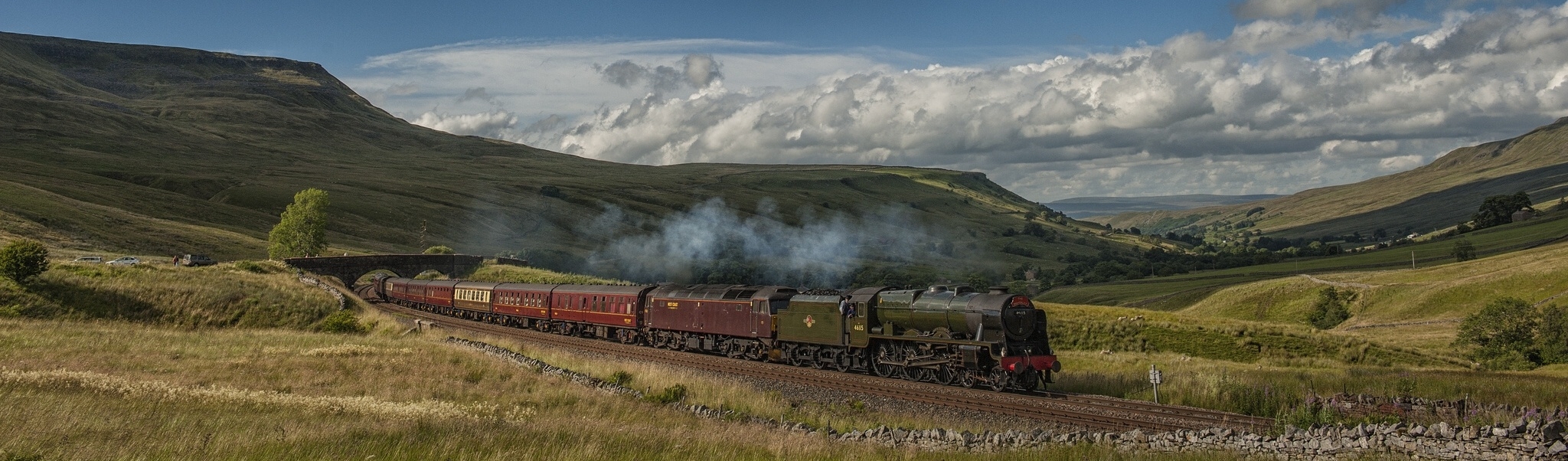
The G 4/5 H was a freight locomotive with a 2-8-0 wheel arrangement, which Maffei developed on the basis of the G 4/5 N, which was manufactured in smaller numbers. With its complex engine, it achieved the highest power of all German locomotives with this wheel arrangement. While the predecessor still had a two-cylinder saturated engine, the G 4/5 H was a superheated locomotive with four cylinders in compound design. This design was not very widespread among freight locomotives in Germany, but it increased the power compared to comparable models. This meant that 995 tonnes could be transported at 40 km/h on a gradient of 0.5 percent, as well as 535 tonnes at 1.4 percent at 30 km/h.
A very similar locomotive had already been delivered to the Baden State Railways as the VIII e a few years earlier. In contrast to this, all cylinders on the G 4/5 H acted on the second coupled axle. As with the VIII e, the use of a bar frame proved to be advantageous for maintenance, as this had a lower installation height than a plate frame of the same strength and thus facilitated access to the inner high-pressure cylinders. The leading axle was designed as an Adams axle, since other designs with a drawbar would have robbed the engine of the space.
Maffei produced 210 engines between 1915 and 1919, another 20 came from Krauss. Of these, ten went to the Military General Directorate in Brussels and 25 were ordered directly for use in the war. After the end of the war, 48 locomotives were given to France as reparations and 13 more to Belgium.
The Reichsbahn took over all remaining locomotives and numbered them as class 568-11. Despite their good performance, the locomotives were taken out of service as early as 1933, which in retrospect is partly due to the aversion of Richard Paul Wagner, head of the design department, to compound locomotives. Some of the other 2-8-0 freight locomotives with conventional engines survived considerably longer, despite being fewer in number. For the same reason, the Reichsbahn did not procure any new locomotives with compound engines, except for test purposes. After the war, depending on the source, there were still two or three vehicles, but they were withdrawn and scrapped in 1947. As a result, no G 4/5 H entered service with either of the two new German railway companies.
Technical data
General
- Built
- 1915-1919
- Manufacturers
- Maffei, Krauss
- Wheel arrangement
- 2-8-0 (Consolidation)
- Gauge
- 1,435 mm (Standard gauge)
Dimensions and weights
- Length
- 18.25 m
- Wheelbase
- 7.30 m
- Total wheelbase
- 14.95 m
- Empty mass
- 69 t
- Service mass
- 76 t
- Adhesion mass
- 64 t
- Total mass
- 121.6 t
- Rigid wheelbase
- 4.80 m
- Axle load
- 16 t
- Water capacity
- 20,200 l
- Fuel capacity
- 6.5 t (coal)
Boiler
- Grate area
- 3.3 m²
- Firebox surface
- 12 m²
- Tube heating surface
- 167 m²
- Evaporative heating surface
- 179 m²
- Superheater surface
- 58 m²
- Total heating surface
- 237.0 m²
Power plant
- Driver diameter
- 1,300 mm
- Boiler pressure
- 16 bar
- Expansion type
- compound
- Cylinders
- four, HP: 400 x 610 mm and LP: 620 x 640 mm
Power
- Power source
- steam
- Estimated power
- 1,000 kW
- Top speed
- 60 km/h
- Starting effort
- 146.2 kN
- Starting effort simple
- 175.4 kN
Calculated values
- Factor of adhesion
- 1 : 4.29
- Optimal speed
- 42 km/h
- Power-to-weight ratio
- 13.2 kW/t
- Heating Surface Equivalent
- 355.0 m²
- Cylinder volume/HSE
- 1 : 976.14
- Adhesive weight/Total
- 1 : 1.19
- Tractive force/Heating surface
- 1 : 12.88
- Grate area/Heating surface
- 1 : 71.82
- Firebox/Tube surface
- 1 : 13.92
- Total/Superheater
- 1 : 3.09