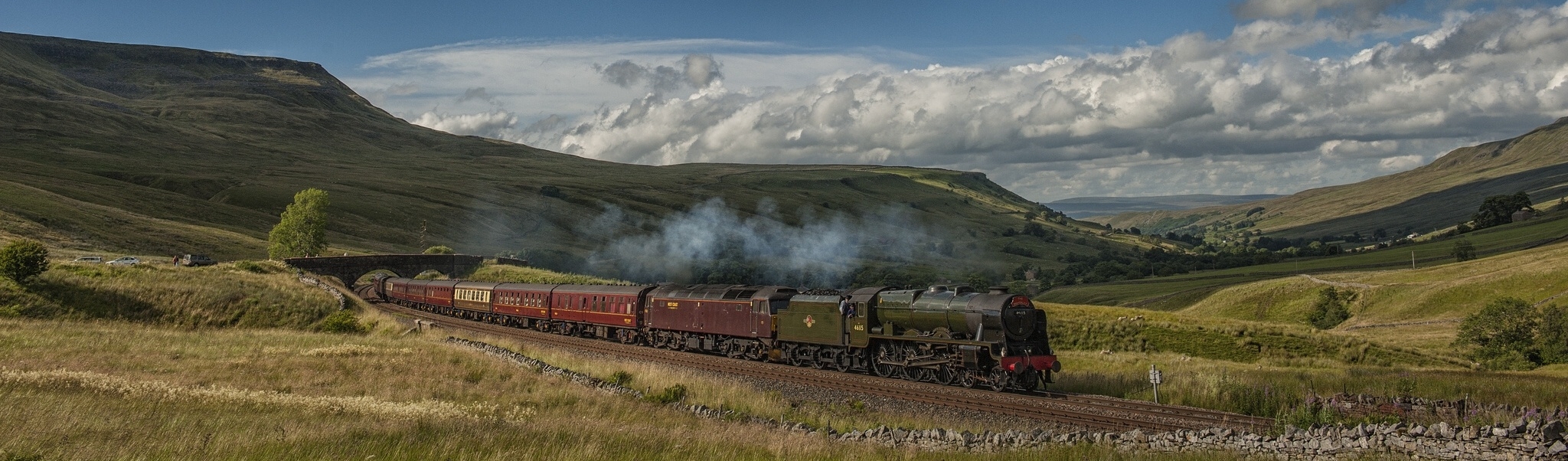



DB AG ICE 4
class 412

In 2008, Deutsche Bahn tendered a new generation of ICE multiple units with the working title ICx. They were initially to replace the 200 km/h InterCity and EuroCity sets and only after the delivery of a sufficient number also the aging ICE 1 and ICE 2. In addition to the largest possible number of seats, the tender also only required a maximum speed of 250 km/h and only optionally 280 km/h. For the first time in history, it was required that the industry bear the entire development costs and that payment should only be made after acceptance. The designs came from Alstom, among others, with the AGV and TGV Duplex that had already been developed.
Ultimately, Siemens emerged as the winner, with Bombardier as the supplier with a share of one third. As with the ICE 3, about every second car is powered on all four axles and achieves a continuous output of 1,650 kW. In contrast to the predecessor, however, the complete power train technology of the AC version is located in the power cars and is not split over several cars. Only in the case of the multi-system version is the machinery for operation under direct current located in the non-powered carriages. Some trains without multi-system equipment have also been used in Switzerland since 2019 and have additional pantographs with Swiss contact strips. The top speed was initially limited to 250 km/h.
In order to achieve the required capacity, the distance between the seats has been reduced compared to the earlier ICE trains. In addition, the usual car length of 26.40 m was abandoned in order to reduce the relative proportion of vestibules in the overall length with longer cars. This means that middle cars with a length of 28.75 m and end cars with a length of 29.10 m are now used. In order to achieve the necessary strength of the longer wagons, they are now made of steel again, using a new type of laser welding technology.
The first version presented in 2015 was the twelve-car ICE 4, which is 346 meters long and offers seating for 830 passengers. It has six powered cars and thus a continuous output of 9,900 kW. Since 2020, seven-car trains three powered cars have been in use. Since 2021, thirteen-car trains have also been running, which were created by adding another power car to a twelve-car train. In principle, the manufacturer has the option of combining trains from five to fourteen parts, provided that the respective combination successfully goes through an approval process.
After the introduction of the thirteen-car trains, the order includes a total of 37 seven-car trains, 50 twelve-car trains and 50 thirteen-car trains. The manufacturers currently assume that the production of the ordered trains will be completed by 2023. A change that only came into effect in 2021 was the increase in the maximum speed for twelve and thirteen-car trains to 265 km/h. Since the trains were already designed for this speed and reached 292 km/h during test runs, only the software had to be adapted and the new speed had to be written down in the driver's cabs in addition to the certification. The seven-car trains are still only allowed to travel 250 km/h because their equipment does not meet the required TSI safety level. According to an expert report, future trains with a maximum speed of 300 km/h will require a completely new type of train.
Technical data
General
| Property | seven-car | twelve-car | thirteen-car |
|---|---|---|---|
| Built | seit 2013 | ||
| Manufacturers | Siemens, Bombardier | ||
| Wheel arrangement | 2-2+B-B+2-2+B-B+B-B+2-2+2-2 | 2-2+B-B+B-B+2-2+B-B+B-B+2-2+B-B+2-2+B-B+2-2+2-2 | 2-2+B-B+B-B+2-2+B-B+B-B+B-B+2-2+B-B+2-2+B-B+2-2+2-2 |
| Gauge | 1,435 mm (Standard gauge) | ||
Dimensions and weights
| Property | seven-car | twelve-car | thirteen-car |
|---|---|---|---|
| Length | 202.00 m | 346.00 m | 374.00 m |
| Wheelbase | 22.10 m | ||
| Empty mass | 392.1 t | 675 t | 736.2 t |
| Service mass | 513.1 t | 893.6 t | 973.3 t |
| Adhesion mass | 240.1 t | 480.2 t | 560.5 t |
| Rigid wheelbase | 2.60 m | ||
| Axle load | 20 t | ||
Power
| Property | seven-car | twelve-car | thirteen-car |
|---|---|---|---|
| Power source | electric - AC | ||
| Continuous power | 4,950 kW (6,730 PS) | 9,900 kW (13,460 PS) | 11,550 kW (15,704 PS) |
| Top speed | 265 km/h | ||
| Starting effort | 225.0 kN | 450.0 kN | 525.0 kN |
Calculated values
| Property | seven-car | twelve-car | thirteen-car |
|---|---|---|---|
| Factor of adhesion | 1 : 10.47 | ||
| Power-to-weight ratio | 9.6 kW/t | 11.1 kW/t | 11.9 kW/t |
| Adhesive weight/Total | 1 : 2.14 | 1 : 1.86 | 1 : 1.74 |