


German Reichsbahn class 52
Soviet Railways series ТЭ, Polish State Railways Ty2 and Ty42, Czechoslovak State Railways class 555.0, French State Railway 150 Y, Bulgarian State Railway class 15, and Yugoslav Railway class 33

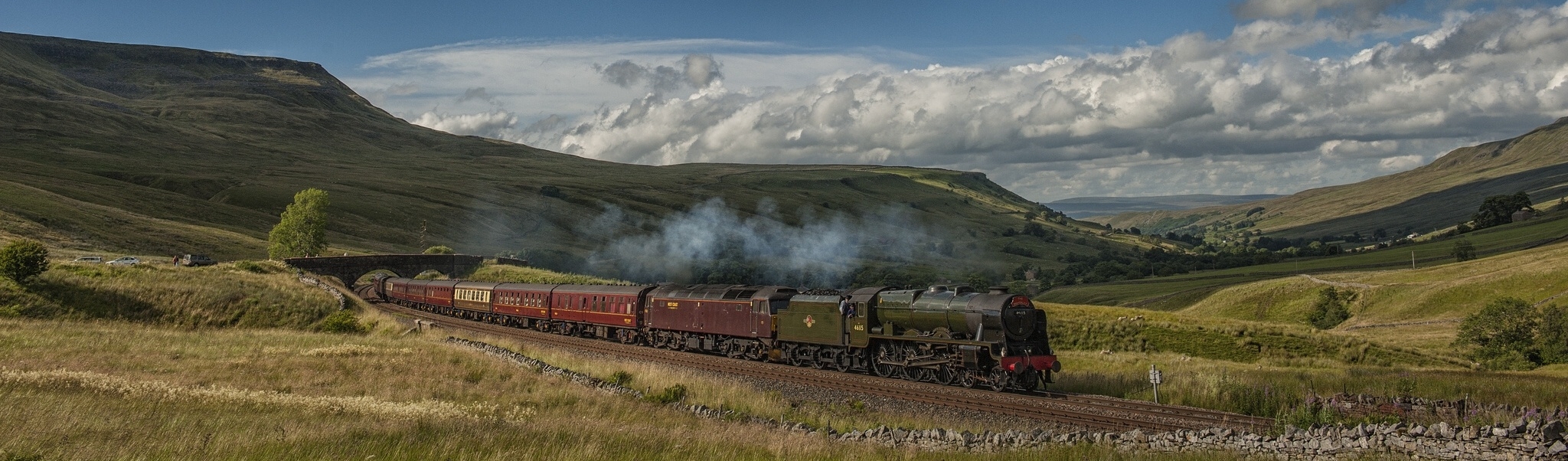
After the class 50 had been gradually simplified in the course of production, the structurally very similar class 52 was designed from the ground up as an even simpler war locomotive. Compromises were made at the running smoothness and compromises in power were accepted in order to obtain a locomotive that could be manufactured as quickly and cheaply as possible and was easy to maintain. The measures used were summarized with the official term “Entfeinerung” (“de-refinement”). In addition, production could be rationalized to a large extent on the basis of the initially planned 15,000 vehicles.
Although the 52 looked similar to the 50 on the outside, a different approach was taken when manufacturing the frame, using a plate frame that was no longer widespread at the time but was easier to manufacture instead of the bar frame. A few locomotives where the exception, as they had been built using frames which had originally been produced for other locomotives. In addition to the direct simplification of some parts, attempts were generally made to switch to simpler production methods. For example, parts on the connecting and coupling rods which had previously been forged were replaced with cast ones. Although this resulted in poorer fitting accuracy and durability over the long term, it was assumed that once the war ended well, the worn out war locos would no longer be needed and that the more mature standard locos would be sufficient.
In addition to simplifications, considerations about the use of the locomotives also flowed into the development. Since it was also assumed that it would be used extensively in the Soviet Union, the cab was closed to protect the crew from the cold. This resulted in the further advantage that one was protected from the wind even when reversing. A new approach was also taken with the tender. Instead of the box-shaped tenders with a separate frame and body that had been customary up to that point, the tub-type tenders or Wannentender were developed, which were clearly recognizable to the eye. They got their name from the tub-shaped water tank, which also served as a self-supporting basic structure. In addition to these, some locomotives were built with condensing gear, using a four- or five-axle condenser tender. These proved particularly useful in the extensive eastern areas of the conquered territory, since a regular supply of fresh water often proved very difficult there. Another positive effect in times of war was that the locomotives did not trail a steam plume that could be seen from afar.
In order to rationalize production, advantages that had resulted from the large number of locomotives were used. In contrast to the past, not every factory was allowed to produce the majority of the part itself, but rather a large number of standardized components were produced by one factory and assembled at a different location. In order to be able to implement this project more easily, the manufacturers joined together to form the Gemeinschaft Großdeutscher Lokomotivhersteller (Association of Greater German Locomotive Manufacturers, GGL). Some important leaders from politics and industry took part in this, of which Albert Speer was the best known. The targeted 15,000 locomotives could not be reached due to the defeat in the war, but up to this point 6,161 had been made. These were scattered across large parts of Europe and there was also a large number of unassembled parts, so that around 300 more locomotives could then be completed in various countries. Together with complete replicas, it is assumed that a total of over 7,000 were made.
Many countries continued to use the class 52 locomotives after the war, sometimes in such large numbers that they were indispensable for a long time. By far the largest part was received by the Soviet Union, which received more than 2,000 either as war bounty or as reparations. In addition to some which were completed later, the existing ones were regauged to 1,520 mm gauge and fitted with central buffer couplings. They were given the designation ТЭ and were available as a reserve in some regions until the 1990s.
Furthermore, Poland received about 1,200 locomotives, which were later supplemented with a few more purchased from the Soviet Union and designated as Ty2 or Ty42. Austria also took over a larger number with 700 locomotives and used them as classes 52 and 152 until 1977.
In Germany, after the end of the war, there were 700 in the western zones and 1,150 in the eastern zone. At the Bundesbahn there was the fact that many of the more mature standard locomotives could be saved to this area before the end of the war and so there was no great need for the class 52. So most of them were retired and some of their boilers were used in other locomotives because they were made of an unproblematic alloy. The Reichsbahn was not so lucky, and so the available locomotives had to be made ready for a longer service life. In many cases, some parts which had formerly been simplified were exchanged for more modern ones. Also, some welded fireboxes were installed instead of the previous riveted ones, especially since expensive non-ferrous metals had been replaced with steel in some places on the war locomotives. The Reko program of the Reichsbahn also included 200 of the class 52, which were now designated 5280 and, among other things, received the same boilers as the 5035. With around 2,000 hp, these were considerably more powerful than the original models. Another 25 had been converted to pulverized lignite as the class 5290. The last ones of the reconstructed locomotives were in scheduled use until 1988.
Technical data
General
- Built
- 1942-1950
- Manufacturers
- Floridsdorf, Henschel, BMAG, Krauss-Maffei, Borsig, Schichau, O&K, Cegielski, Chrzanów, Esslingen, Jung, Škoda, Grafenstaden
- Wheel arrangement
- 2-10-0 (Decapod)
- Gauge
- 1,435 mm (Standard gauge)
Dimensions and weights
- Length
- 22.98 m
- Wheelbase
- 9.20 m
- Empty mass
- 75.9 t
- Service mass
- 84 t
- Adhesion mass
- 75.7 t
- Total mass
- 142.7 t
- Rigid wheelbase
- 3.30 m
- Axle load
- 15.4 t
- Water capacity
- 30,000 l
- Fuel capacity
- 10 t (coal)
Boiler
- Grate area
- 3.89 m²
- Firebox surface
- 15.9 m²
- Tube heating surface
- 161.93 m²
- Evaporative heating surface
- 177.83 m²
- Superheater surface
- 68.94 m²
- Total heating surface
- 246.8 m²
Power plant
- Driver diameter
- 1,400 mm
- Boiler pressure
- 16 bar
- Expansion type
- simple expansion
- Cylinders
- two, 600 x 660 mm
Power
- Power source
- steam
- Indicated power
- 1,192 kW (1,621 PS)
- Top speed
- 80 km/h
- Starting effort
- 230.8 kN
Calculated values
- Factor of adhesion
- 1 : 3.22
- Optimal speed
- 32 km/h
- Power-to-weight ratio
- 14.2 kW/t
- Heating Surface Equivalent
- 395.2 m²
- Cylinder volume/HSE
- 1 : 944.36
- Adhesive weight/Total
- 1 : 1.11
- Tractive force/Heating surface
- 1 : 19.53
- Grate area/Heating surface
- 1 : 63.44
- Firebox/Tube surface
- 1 : 10.18
- Total/Superheater
- 1 : 2.58