


Prussian S 102
German Reichsbahn class 172
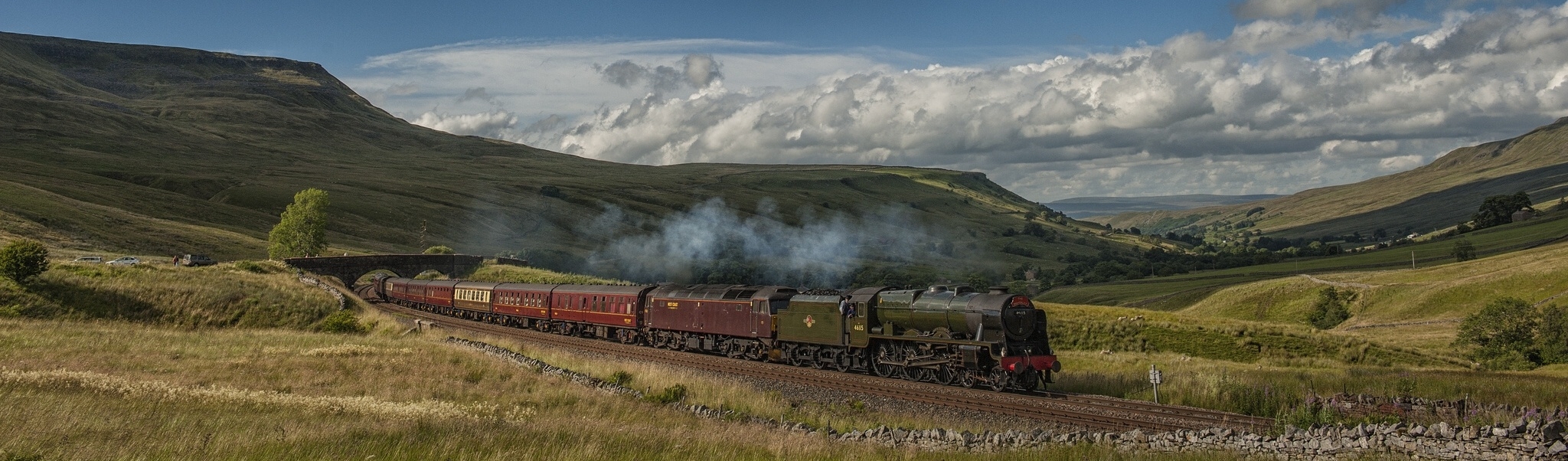
Because the S 10 built by Schwartzkopff was not convincing with its four-cylinder engine and because of its high fuel consumption, Vulcan developed an almost identical successor. The biggest difference in the resulting S 102 was that the engine only had three cylinders. Due to the omission of the fourth cylinder, the diameter of the remaining cylinders was increased from 430 to 500 mm, while the stroke remained the same. Now that there was only one cylinder inside the frame, maintenance was made a little easier.
Although the new model was more powerful than the original S 10, it still did not quite match the performance of the Henschel compound locomotives. In everyday life, trains up to 400 tonnes were pulled at 100 km/h, while the S 101 of the 1914 type pulled 450 tonnes at the same speed. The difference became even greater on inclines. Despite the inferiority compared to the sister model, 124 examples were built, which later became the class 172 at the Reichsbahn. In addition, these locomotives were used to test various innovations, albeit not very successfully.
Three of them were fitted with uniflow cylinders like they were used on ships and locomobiles. However, since no significant advantages could be achieved with this, the locomotives were reverted to the standard. Higher boiler pressures were tested on three other locomotives during the Reichsbahn era. Two received boilers with a medium pressure of 25 bars (363 psi), with which they achieved the same performance as the class 03. Since the boilers had been damaged over time, they were later restored to their original condition. A similar fate befell the high-pressure locomotive H 17 206, which was designed for a boiler pressure of 60 bars (870 psi) and whose engine was converted to compound action. Series production of this variant would have been considerably more expensive, so it was converted back to the original version in 1929 and retired in 1936.
After the Second World War there were still 88 examples, all of which were in West Germany. They were decommissioned in 1948 and thus did not live to see the founding of the Bundesbahn.
Technical data
General
- Built
- 1914-1915
- Manufacturers
- Vulcan
- Wheel arrangement
- 4-6-0 (Ten-wheeler)
- Gauge
- 1,435 mm (Standard gauge)
Dimensions and weights
- Length
- 21.20 m
- Wheelbase
- 9.10 m
- Total wheelbase
- 17.47 m
- Empty mass
- 73.9 t
- Service mass
- 80.3 t
- Adhesion mass
- 52.1 t
- Total mass
- 144 t
- Rigid wheelbase
- 4.70 m
- Axle load
- 17.4 t
- Water capacity
- 31,500 l
- Fuel capacity
- 7.5 t (coal)
Boiler
- Grate area
- 2.82 m²
- Firebox surface
- 14.17 m²
- Tube heating surface
- 138.92 m²
- Evaporative heating surface
- 153.09 m²
- Superheater surface
- 61.5 m²
- Total heating surface
- 214.6 m²
Power plant
- Driver diameter
- 1,980 mm
- Boiler pressure
- 14 bar
- Expansion type
- simple expansion
- Cylinders
- three, 500 x 630 mm
Power
- Power source
- steam
- Indicated power
- 883 kW (1,201 PS)
- Top speed
- 120 km/h
- Starting effort
- 142.0 kN
Calculated values
- Factor of adhesion
- 1 : 3.60
- Optimal speed
- 39 km/h
- Power-to-weight ratio
- 11.0 kW/t
- Heating Surface Equivalent
- 346.9 m²
- Cylinder volume/HSE
- 1 : 1,069.64
- Adhesive weight/Total
- 1 : 1.54
- Tractive force/Heating surface
- 1 : 13.82
- Grate area/Heating surface
- 1 : 76.10
- Firebox/Tube surface
- 1 : 9.80
- Total/Superheater
- 1 : 2.49