


New Zealand Railways class Q (1901)

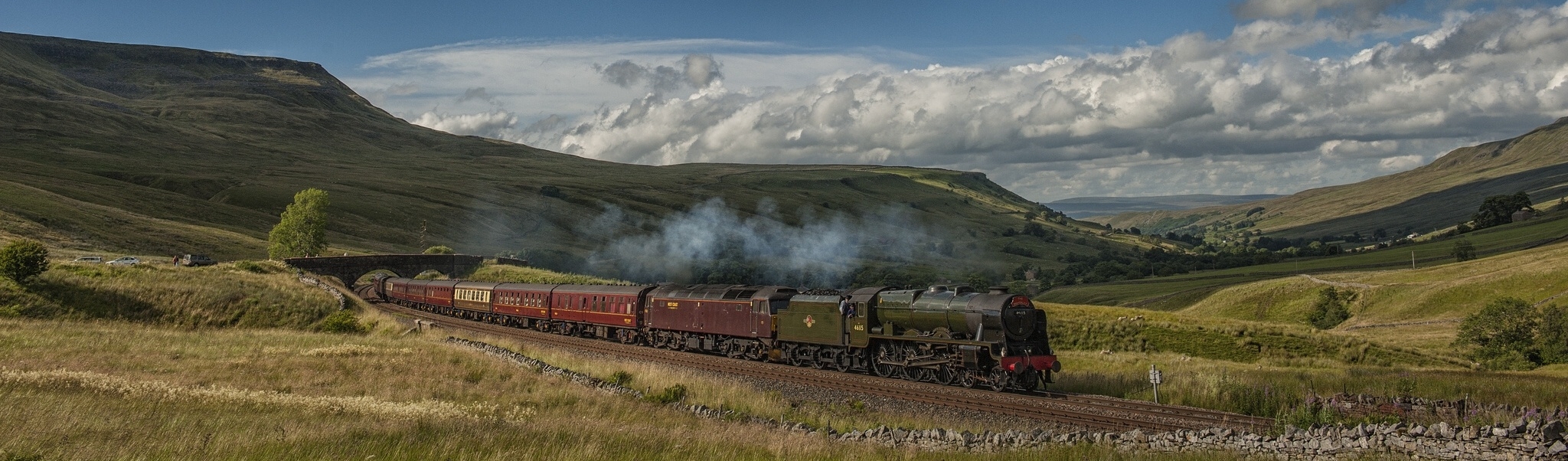
The class Q of 1901 was most likely the first class of tender locomotives originally built as 4-6-2 “Pacifics”. It arose from the need for a locomotive like the 4-6-0 class UB, but with a wide firebox to burn the low-quality lignite of New Zealand. The answer was a trailing axle that carried the large firebox. Designed by A.L. Beattie, 13 arrived in the country in 1901 and 1902.
Soon the more modern Pacific classes A and AB took over the hardest services. In 1914, the class AA was introduced as a development of the Q, but with dimensions similar to the A and AB. Later all locomotives of class G also got the same boilers as class AB. In their last years they were operated in the Otago and West Coast regions and the last one was withdrawn in 1957.
Technical data
General
- Built
- 1901
- Manufacturers
- Baldwin
- Wheel arrangement
- 4-6-2 (Pacific)
- Gauge
- 1,067 mm (Cape gauge)
Dimensions and weights
- Length
- 16.87 m
- Wheelbase
- 8.00 m
- Service mass
- 48.8 t
- Adhesion mass
- 31.2 t
- Total mass
- 73.3 t
- Rigid wheelbase
- 2.79 m
- Axle load
- 10.7 t
- Water capacity
- 7,730 l
- Fuel capacity
- 5.1 t (coal)
Boiler
- Grate area
- 3.716 m²
- Firebox surface
- 9.773 m²
- Tube heating surface
- 145.654 m²
- Evaporative heating surface
- 155.427 m²
- Total heating surface
- 155.4 m²
Power plant
- Driver diameter
- 1,245 mm
- Boiler pressure
- 13.8 bar
- Expansion type
- simple expansion
- Cylinders
- two, 406 x 559 mm
Power
- Power source
- steam
- Estimated power
- 746 kW (1,014 PS)
- Starting effort
- 86.9 kN
Calculated values
- Factor of adhesion
- 1 : 3.52
- Optimal speed
- 53 km/h
- Power-to-weight ratio
- 15.3 kW/t
- Heating Surface Equivalent
- 204.3 m²
- Cylinder volume/HSE
- 1 : 709.63
- Adhesive weight/Total
- 1 : 1.56
- Tractive force/Heating surface
- 1 : 11.68
- Grate area/Heating surface
- 1 : 41.83
- Firebox/Tube surface
- 1 : 14.90