


London, Brighton & South Coast class H2

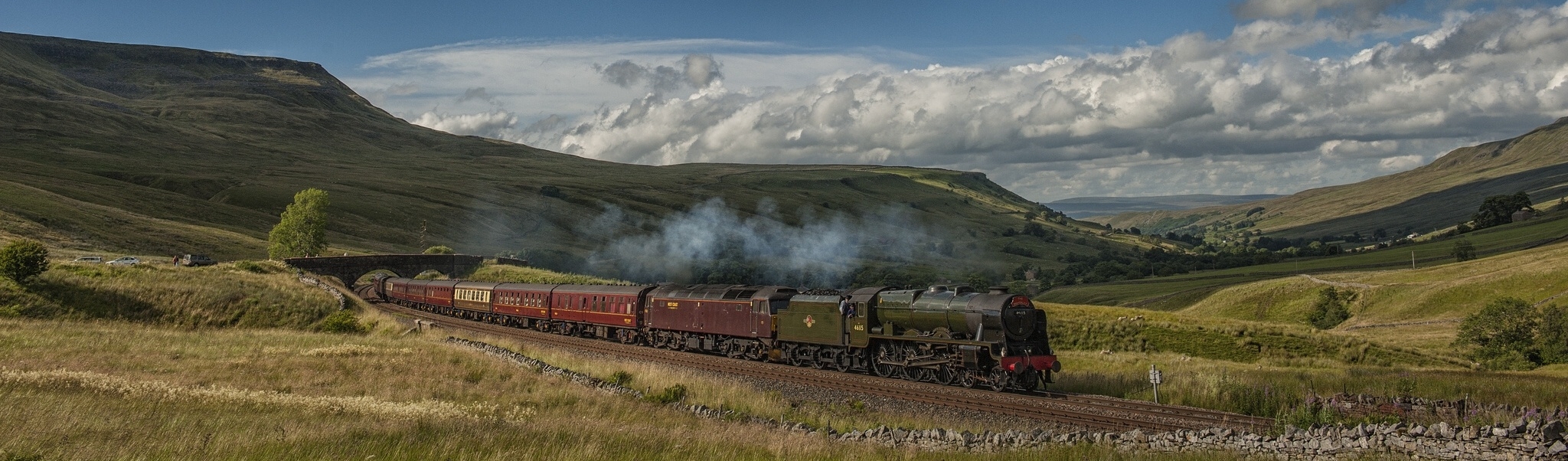
The H2 was basically a superheated variant of the H1 Atlantic. Introduced when L.B. Billinton was in office, most of its design was still identical with the predecessor class introduced by D.E. Marsh. However, it could still be traced back to the large boilered GNR C1. Compared to the H1, the H2 used larger cylinders, while a reduced boiler pressure of 170 psi was still sufficient thanks to the Schmidt type superheater. The firebox was still the same. Six were built at Brighton in 1911 and 1912.
At the beginning, they hauled the most important express trains between Victoria and Brighton, like the Brighton Belle. After new locomotives had been introduced in the middle of the twenties, they were used for other express services. At this time, Maunsell also superheated their H1 sisters. In 1938 the boiler pressure of the H2 was increased to 200 psi, increasing the starting tractive effort to 24,500 pounds.
They lost many of their tasks in World War II when the cross-channel ferries were stopped. Fortunately, these services resumed after the war ended. One of the six locomotives was withdrawn in 1949 and the rest followed between 1956 and 1958. After the turn of the millennium, the Bluebell Railway started to construct a replica of No. 32424 “Beachy Head” that had been the last one of the class to be withdrawn. It uses a boiler of the GNR C1 and is operational again since 2024.
Technical data
General
| Property | as built | increased boiler pressure |
|---|---|---|
| Built | 1911-1912, 2024 | 1938 |
| Manufacturers | Brighton | |
| Wheel arrangement | 4-4-2 (Atlantic) | |
| Gauge | 1,435 mm (Standard gauge) | |
Dimensions and weights
| Property | as built | increased boiler pressure |
|---|---|---|
| Wheelbase | 8.03 m | |
| Service mass | 69.6 t | |
| Adhesion mass | 38.1 t | |
| Total mass | 110.2 t | |
| Rigid wheelbase | 2.08 m | |
| Water capacity | 15,910 l | |
| Fuel capacity | 4.1 t (coal) | |
Boiler
| Property | as built | increased boiler pressure |
|---|---|---|
| Grate area | 2.88 m² | |
| Firebox surface | 12.697 m² | |
| Tube heating surface | 177.724 m² | |
| Evaporative heating surface | 190.421 m² | |
| Superheater surface | 42.828 m² | |
| Total heating surface | 233.2 m² | |
Power plant
| Property | as built | increased boiler pressure |
|---|---|---|
| Driver diameter | 2,019 mm | |
| Boiler pressure | 11.7 bar | 13.8 bar |
| Expansion type | simple expansion | |
| Cylinders | two, 533 x 660 mm | |
Power
| Property | as built | increased boiler pressure |
|---|---|---|
| Power source | steam | |
| Estimated power | 895 kW (1,217 PS) | 969 kW (1,317 PS) |
| Starting effort | 92.7 kN | 109.1 kN |
Calculated values
| Property | as built | increased boiler pressure |
|---|---|---|
| Factor of adhesion | 1 : 4.03 | 1 : 3.43 |
| Optimal speed | 60 km/h | 55 km/h |
| Power-to-weight ratio | 12.9 kW/t | 13.9 kW/t |
| Heating Surface Equivalent | 339.6 m² | |
| Cylinder volume/HSE | 1 : 869.19 | |
| Adhesive weight/Total | 1 : 1.83 | |
| Tractive force/Heating surface | 1 : 8.30 | 1 : 9.77 |
| Grate area/Heating surface | 1 : 80.99 | |
| Firebox/Tube surface | 1 : 14.00 | |
| Total/Superheater | 1 : 4.45 | |