


Sul e Sueste No. 101 to 119
Portuguese State Railway No. 1701 to 2719
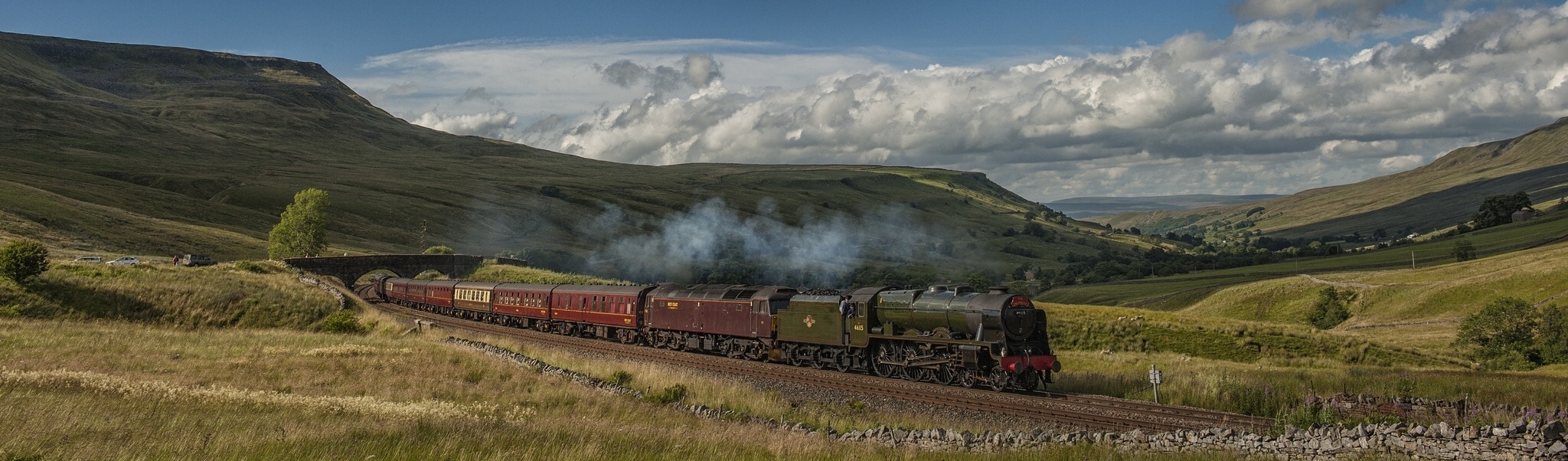
These Consolidations were built for mixed traffic in the southeast of Portugal. Previously, the Minho e Douro in the North had received the first saturated four-cylinder compounds from BMAG of Berlin. As the topography in the southeast is easier, the Sul e Suleste ordered very similar locomotives, but as simple two-cylinders with superheaters. Their drivers were a bit larger at four feet and 4 3/8 inches.
BMAG delivered six in 1912 and five more in 1914. After World War I, North British built an additional batch of eight in 1921. As expected, they were cheaper to maintain than the compounds. On inclines of 1 in 66.6, they could haul 440 tonnes with 18.6 mph. They were originally numbered 101 to 119. Later, the state railways numbered them 1701 to 1719 and in 1950 they were renumbered to 701 to 719.
Technical data
General
- Built
- 1912, 1914, 1921
- Manufacturers
- BMAG, North British
- Wheel arrangement
- 2-8-0 (Consolidation)
- Gauge
- 1,668 mm (Iberian broad gauge)
Dimensions and weights
- Wheelbase
- 7.30 m
- Rigid wheelbase
- 3.20 m
- Total wheelbase
- 14.86 m
- Service weight
- 65.6 t
- Total weight
- 102.6 t
- Water capacity
- 12,893 l
- Fuel capacity
- 4.5 t (coal)
Boiler
- Grate area
- 2.843 m²
- Firebox surface
- 14.028 m²
- Tube heating surface
- 145.486 m²
- Evaporative heating surface
- 159.514 m²
- Superheater surface
- 34.003 m²
- Total heating surface
- 193.5 m²
Power plant
- Driver diameter
- 1,330 mm
- Boiler pressure
- 11.7 bar
- Expansion type
- simple expansion
- Cylinders
- two, 560 x 614 mm
Power
- Power source
- steam
- Starting effort
- 86.8 kN
Calculated values
- Heating Surface Equivalent
- 297.7 m²
- Cylinder volume/HSE
- 1 : 1,018.13
- Tractive force/Heating surface
- 1 : 9.37
- Grate area/Heating surface
- 1 : 68.07
- Firebox/Tube surface
- 1 : 10.37
- Total/Superheater
- 1 : 4.69