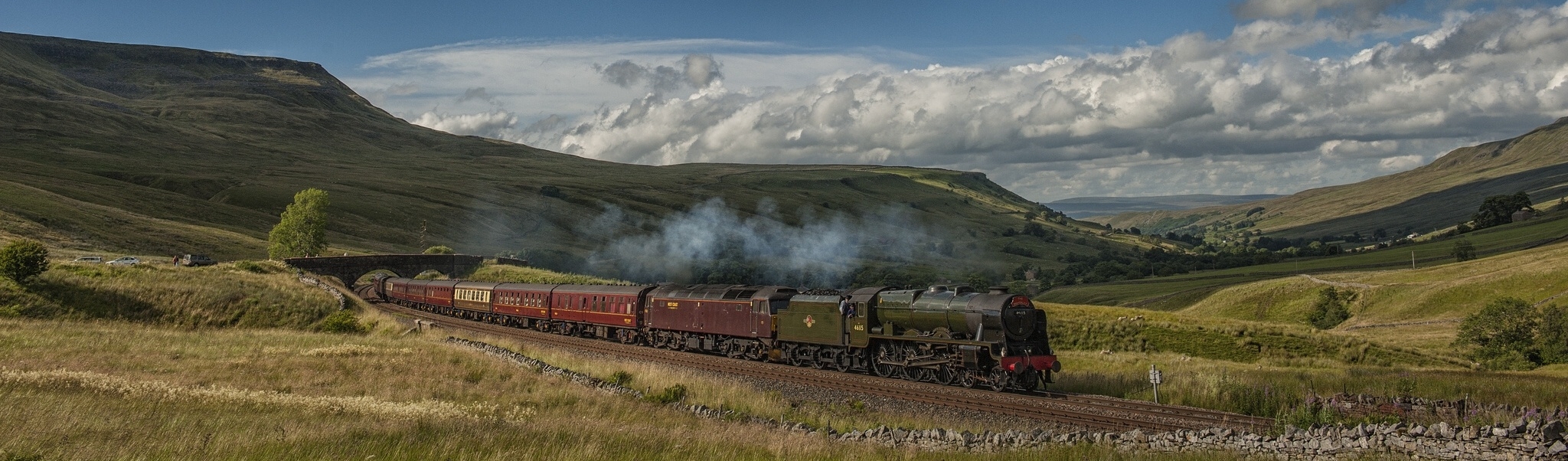



Queensland Railways class C17 and Commonwealth Railways class NM

As a development of the C16, C.F. Pemberton developed the class C17. While the letter C stood for four coupled axles, the 17 indicated the cylinder diameter in inches. Production took place on a large scale in QR's own workshops and at other manufacturers, and the Commonwealth Railways also ordered 22 identical locomotives as the NM class.
The locomotives initially had open cabs, large steam domes and a Robinson type superheater. The engines that were completed after 1938 had closed cabs, smaller domes, new tenders and larger slide valves. The last 40 examples used Timken roller bearings, which in connection with the brown color scheme led to the nickname “Brown Bombers”, after the boxer Joe Louis.
The C17 quickly gained a reputation as a versatile and powerful locomotive. It was used with all train types from passenger over suburban to freight trains. Thanks to the low axle load, they could also be used in front of mail trains where the axle load of the Pacific class B18¼ was too high. The production of a total of 227 locomotives ran over a long period from 1920 to 1953.
Just one year after the end of production, the older engines were taken out of service, and the last survived into the late 1960s. Remarkable is that from the 249 locomotives built, 25 are preserved. The Mary Valley Rattler owns six with No. 967 being operational today, while two others are being overhauled.
Technical data
General
| Property | as built | new boiler |
|---|---|---|
| Built | 1920-1953 | |
| Manufacturers | North Ipswich, Armstrong Whitworth, Clyde Engineering, Walkers, Evans, Anderson, Phelan & Co. | |
| Wheel arrangement | 4-8-0 (Twelve-wheeler) | |
| Gauge | 1,067 mm (Cape gauge) | |
Dimensions and weights
| Property | as built | new boiler |
|---|---|---|
| Length | 16.29 m | |
| Service mass | 46.7 t | |
| Adhesion mass | 36.2 t | |
| Total mass | 79.5 t | |
| Rigid wheelbase | 3.81 m | |
| Axle load | 9.1 t | |
| Water capacity | 13,866 l | |
| Fuel capacity | 8.4 t (coal) | |
Boiler
| Property | as built | new boiler |
|---|---|---|
| Grate area | 1.719 m² | |
| Firebox surface | 10.777 m² | |
| Tube heating surface | 82.126 m² | 76.552 m² |
| Evaporative heating surface | 92.903 m² | 87.329 m² |
| Superheater surface | 16.444 m² | |
| Total heating surface | 109.3 m² | 103.8 m² |
Power plant
| Property | as built | new boiler |
|---|---|---|
| Driver diameter | 1,143 mm | |
| Boiler pressure | 11 bar | 12.1 bar |
| Expansion type | simple expansion | |
| Cylinders | two, 432 x 559 mm | |
Power
| Property | as built | new boiler |
|---|---|---|
| Power source | steam | |
| Estimated power | 597 kW (812 PS) | 619 kW (842 PS) |
| Starting effort | 85.5 kN | 93.5 kN |
Calculated values
| Property | as built | new boiler |
|---|---|---|
| Factor of adhesion | 1 : 4.16 | 1 : 3.80 |
| Optimal speed | 43 km/h | 40 km/h |
| Power-to-weight ratio | 12.8 kW/t | 13.2 kW/t |
| Heating Surface Equivalent | 179.7 m² | 174.1 m² |
| Cylinder volume/HSE | 1 : 910.86 | 1 : 940.02 |
| Adhesive weight/Total | 1 : 1.29 | |
| Tractive force/Heating surface | 1 : 16.33 | 1 : 18.82 |
| Grate area/Heating surface | 1 : 63.61 | 1 : 60.37 |
| Firebox/Tube surface | 1 : 7.62 | 1 : 7.10 |
| Total/Superheater | 1 : 5.65 | 1 : 5.31 |