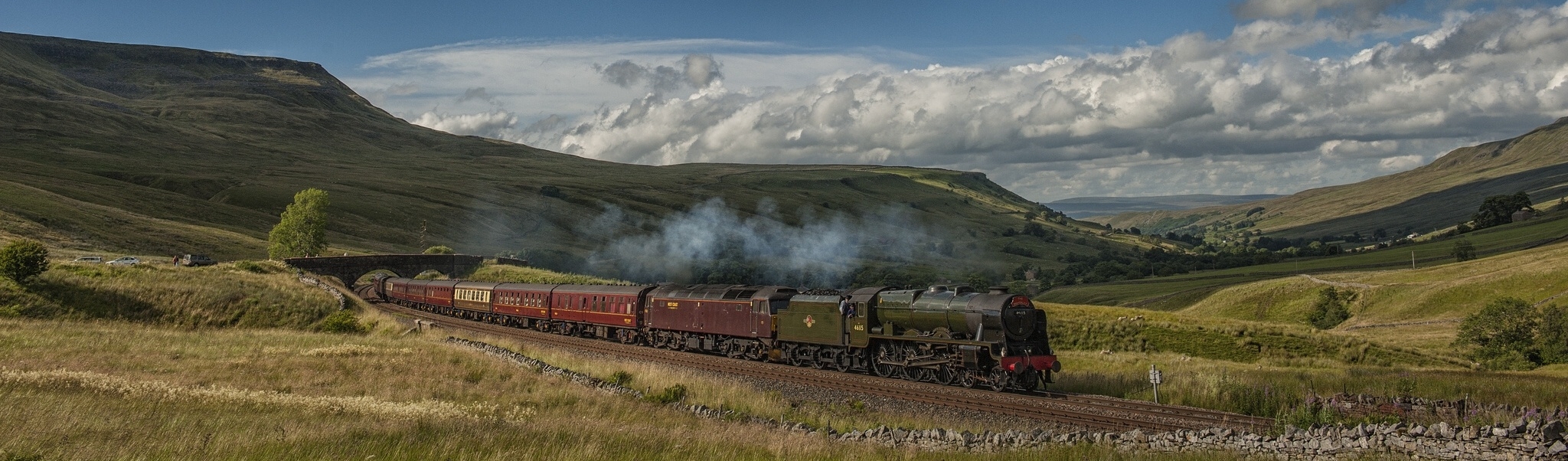
In 1851, Bavaria and Austria had sealed a state treaty that several railways should be built to connect the two countries. A total of 54 Series I express locomotives were procured for the first line to be opened from Vienna via Linz to Salzburg. The locomotives were built in several workshops: 18 in the Wiener Neustadt locomotive factory, 24 by the Staats-Eisenbahngesellschaft factory and six by Sigl. It was not until 1863 that the last six pieces followed from the KEB's own workshop. After the entire route had been opened, a big party was held in the Vienna Augarten on August 15, 1860, which was also attended by the passengers of the first train that had arrived from Munich via Salzburg with a Series I locomotive.
As was usual at the time, the locomotives did not have a driver's cab. Proper cabs were only retrofitted later, as were Kobel chimneys to protect against flying sparks. Despite the driving wheel diameter of only 1,580 mm, they were initially used in express train services.
Between 1869 and 1872, 30 more Series II locomotives followed, most of which had been manufactured by the KEB workshop. They had the same driving wheel diameter and the same wheel arrangement, but were slightly heavier. Both series were equipped with outside cylinders, but the series I still had an inner frame and the series II had an outer frame. The boiler pressure was now nine instead of seven bars. The engineer Johann Zeh installed the so-called Zehn flap, with the help of which one could direct air into the cylinders when the regulator was closed and whose compression could be used as an additional brake.
In the 1880s, the Series I locomotives received new boilers that could be operated at 10 bars. The grate area was increased and the heating surface decreased, which improved their relation to each other and brought the boiler into line with the II series. These too were later operated with ten bars. The Series I locomotives survived with the k.k. State railways as series 12 until 1904, their successors became series 21, even came to the BBÖ and were retired in 1928.