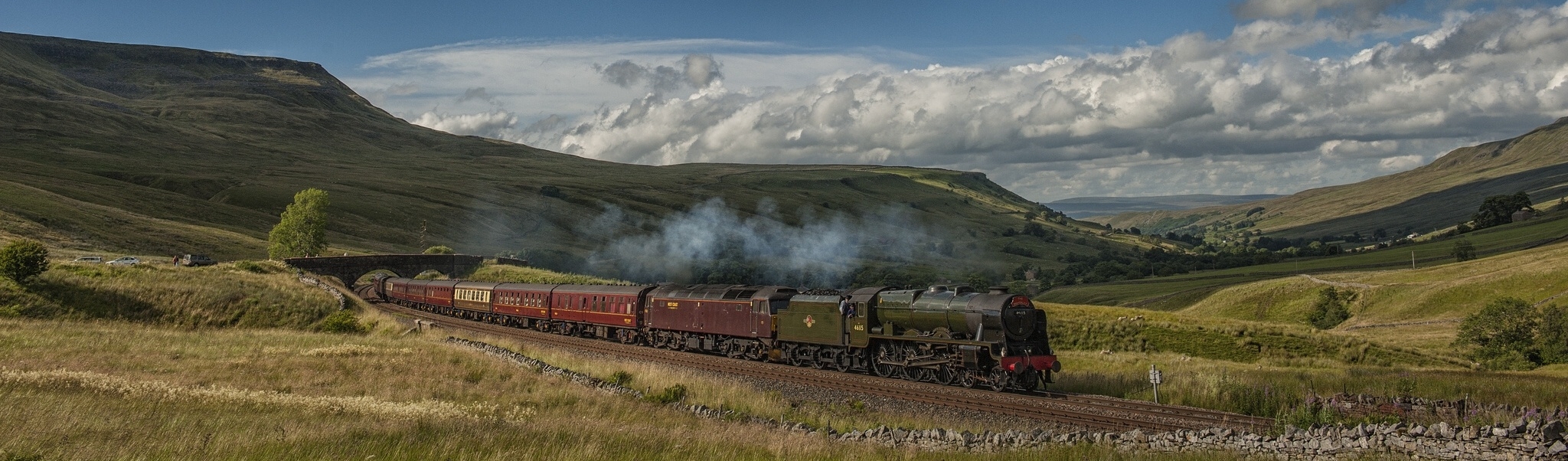



South Manchurian Railway Pashiko class
China Railway SL5

When the power and speed of the existing Pacific locomotives were no longer sufficient, the development of more powerful locomotives was started. In 1927, locomotive designer Nobutarō Yoshino had just returned to Japan from the United States after spending some time at ALCO. Based on his findings, the Pashiko class was developed and eleven copies were built at the Shahekou plant in Dalian.
On the one hand, power was increased by enlarging the firebox and cylinders, as was common in the USA at the time. In addition, modern construction principles were used, which included a boiler with a combustion chamber and a stoker. The top speed was increased in line with the increase in output thanks to a ten centimeter larger diameter of the coupled wheels.
On the South Manchurian Railway they pulled the most important express trains. This included the train between Dalian and Changchun, which completed the route in two hours less with this locomotive. They were only surpassed by the Pashina class streamlined Pacifics. After the Second World War, the Chinese State Railways classified them as class SL5. They initially pulled passenger trains and individual vehicles could still be observed around 1980 in use for minor tasks.
Technical data
General
- Built
- 1927-1928
- Manufacturers
- Shahekou
- Wheel arrangement
- 4-6-2 (Pacific)
- Gauge
- 1,435 mm (Standard gauge)
Dimensions and weights
- Service mass
- 102.3 t
- Adhesion mass
- 63.9 t
Boiler
- Grate area
- 4.82 m²
Power plant
- Driver diameter
- 1,850 mm
- Boiler pressure
- 14 bar
- Expansion type
- simple expansion
- Cylinders
- two, 584 x 710 mm
Power
- Power source
- steam
- Estimated power
- 1,800 kW (2,447 PS)
- Starting effort
- 155.8 kN
Calculated values
- Factor of adhesion
- 1 : 4.03
- Optimal speed
- 71 km/h
- Power-to-weight ratio
- 17.6 kW/t
- Adhesive weight/Total
- 1 : 1.60