Banner
Navigation
loco-info.com
The reference for locomotives and railcars

Northern Pacific classes Z-6 to Z-8

United States 1936 47 produced
Still gleaming fresh from factory is Z-6 No. 5120 in 1937 at Duluth, Minnesota collection Taylor Rush

The first Challenger locomotives, i.e. the wheel arrangement 4-6-6-4, were built in 1936. In addition to the well-known Challenger of the Union Pacific, this was the Z-6 class of the Northern Pacific. Since these had to burn lignite, the firebox had to be of enormous size to achieve the required output. The grate alone was 16 feet long, the entire firebox including the combustion chamber was 20 feet 6 inches long, 9 feet 6 inches wide and up to 7 feet 6 inches high. This made a grate area of 152.3 square feet and made the two-axle trailing bogie necessary to be able to carry the load.

21 members of the class Z-6 were delivered by ALCO-Schenectady in 1936 and 1937. The first four still had friction bearings on the axles and were approximately 4,500 pounds or two tons heavier than the rest with Timken roller bearings, the weights of which are given in the table below. With a driver diameter of 69 inches, they could also haul heavy passenger trains if necessary.

In 1941, six heavier locomotives followed with slightly different boiler dimensions, drivers one inch larger and a boiler pressure increased by 10 psi, which formed the class Z-7. Instead of the six-axle tender with a water capacity of 22,000 gallons, seven-axle 25,000-gallon tenders were used. In the years 1943 and 1944, 20 almost identical Z-8 were manufactured, but because of the wartime conditions, many of the high-strength steels had to be replaced with conventional, heavier steels. This added about 1,000 pounds to the weight.

The Z-8s were the last steam locomotives procured by the Northern Pacific. Because they were fired with lignite, they consumed gigantic amounts of fuel. On the 65 mile line from Townsend to Bozeman, Montana with a constant incline, there were reports of coal consumption of 831 pounds per mile. The relatively young locomotives were retired between 1954 and 1959. The Spokane, Portland & Seattle Railway procured almost identical locomotives, namely six Z-6 and two Z-8 with oil firing.
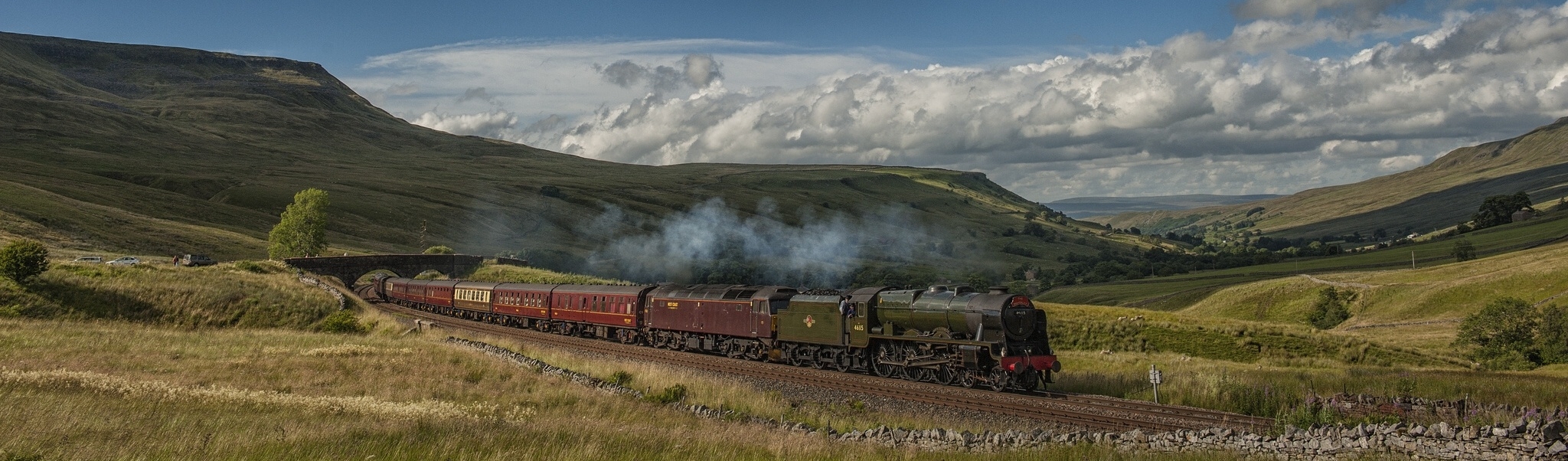
Z-6 No. 5106 in September 1952 at Spokane, Washington D. W. Eldridge / collection Taylor Rush
Z-7 No. 5121 waiting for it's clear signal with a long freight train in November 1941 somewhere in Montana W. R. McGee / collection Taylor Rush

Technical data

General

Property Z-6 Z-7 Z-8
Built 1936-1937 1941 1943-1944
Manufacturers ALCO
Wheel arrangement 4-6-6-4 (Challenger)
Gauge 1,435 mm (Standard gauge)

Dimensions and weights

Property Z-6 Z-7 Z-8
Wheelbase 18.85 m 18.95 m
Service mass 284.2 t 291.7 t 292.1 t
Adhesion mass 197.3 t 201.4 t
Total mass 464.9 t 490.3 t 490.8 t
Rigid wheelbase 7.42 m 7.52 m
Axle load 33 t 33.6 t
Water capacity 83,279 l 94,635 l
Fuel capacity 24.5 t (coal)
Total wheelbase 33.54 m

Boiler

Property Z-6 Z-7 Z-8
Grate area 14.149 m²
Firebox surface 77.946 m² 70.235 m²
Tube heating surface 466.281 m² 463.865 m²
Evaporative heating surface 544.227 m² 534.1 m²
Superheater surface 196.397 m² 195.561 m²
Total heating surface 740.6 m² 729.7 m²

Power plant

Property Z-6 Z-7 Z-8
Driver diameter 1,753 mm 1,778 mm
Boiler pressure 17.2 bar 17.9 bar
Expansion type simple expansion
Cylinders four, 584 x 813 mm

Power

Property Z-6 Z-7 Z-8
Power source steam
Estimated power 4,847 kW (6,590 PS)
Starting effort 463.8 kN 475.5 kN

Calculated values

Property Z-6 Z-7 Z-8
Factor of adhesion 1 : 4.17 1 : 4.16
Optimal speed 64 km/h 63 km/h
Power-to-weight ratio 17.1 kW/t 16.6 kW/t
Heating Surface Equivalent 1,326.8 m² 1,276.4 m²
Cylinder volume/HSE 1 : 656.85 1 : 682.76
Adhesive weight/Total 1 : 1.44 1 : 1.45
Tractive force/Heating surface 1 : 13.08 1 : 13.61
Grate area/Heating surface 1 : 52.34 1 : 51.57
Firebox/Tube surface 1 : 5.98 1 : 6.60
Total/Superheater 1 : 2.77 1 : 2.73
Auf Deutsch umschalten

Settings

Your settings are retained for this browser session only.

Consent to cookies

We use cookies to save your display settings. If you decline, the settings are retained only for the current browser session.