


Maine Central classes C, C1 and C2
United States 1907 21 produced

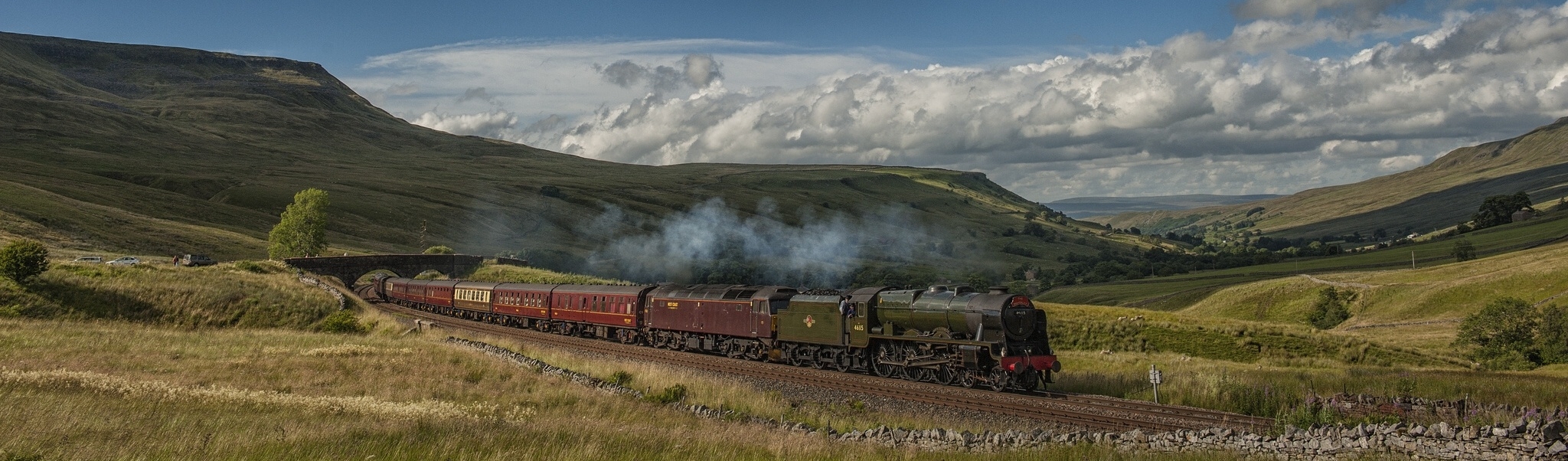
Class C designated Pacifics of the Maine Central for passenger service, which were significantly lighter than the later USRA Light Pacific. The actual C from 1907 was delivered without a superheater. The C1 and C2, built from 1912 onwards, were operated with superheated steam from the start. After 16 locomotives from the first series, five C-3s were built in 1917, which had significantly larger cylinders with a lower boiler pressure.
Technical data
General
- Built
- 1907-1914
- Manufacturers
- ALCO
- Wheel arrangement
- 4-6-2 (Pacific)
- Gauge
- 1,435 mm (Standard gauge)
Dimensions and weights
- Length
- 22.86 m
- Wheelbase
- 10.26 m
- Total wheelbase
- 20.42 m
- Service mass
- 103.4 t
- Adhesion mass
- 66.6 t
- Total mass
- 166.9 t
- Rigid wheelbase
- 3.96 m
- Water capacity
- 26,498 l
- Fuel capacity
- 10 t (coal)
Boiler
- Grate area
- 4.668 m²
- Firebox surface
- 20.996 m²
- Tube heating surface
- 235.602 m²
- Evaporative heating surface
- 256.598 m²
- Superheater surface
- 53.35 m²
- Total heating surface
- 309.9 m²
Power plant
- Driver diameter
- 1,854 mm
- Boiler pressure
- 13.8 bar
- Expansion type
- simple expansion
- Cylinders
- two, 559 x 711 mm
Power
- Power source
- steam
- Estimated power
- 1,603 kW (2,179 PS)
- Starting effort
- 140.4 kN
Calculated values
- Factor of adhesion
- 1 : 4.65
- Optimal speed
- 69 km/h
- Power-to-weight ratio
- 15.5 kW/t
- Heating Surface Equivalent
- 468.3 m²
- Cylinder volume/HSE
- 1 : 744.94
- Adhesive weight/Total
- 1 : 1.55
- Tractive force/Heating surface
- 1 : 9.46
- Grate area/Heating surface
- 1 : 66.40
- Firebox/Tube surface
- 1 : 11.22
- Total/Superheater
- 1 : 4.81