


Cape Government Railways class 7 (1896)
South African class 7A

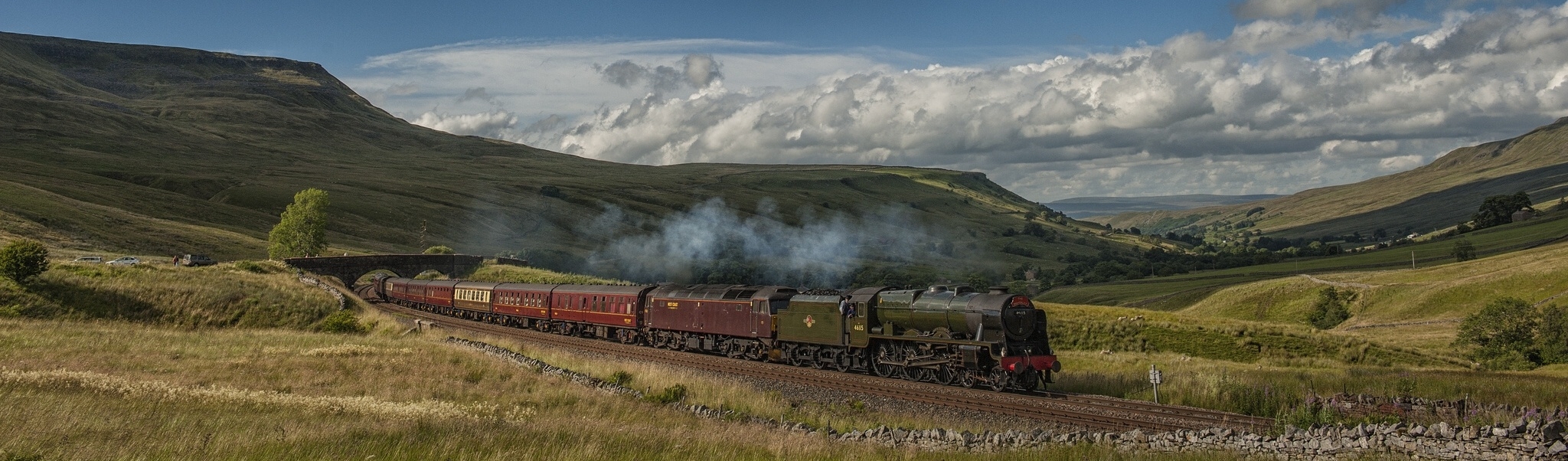
The second type of Class 7 4-8-0 locomotives procured by the Cape Government Railways was built from 1896 for the central and eastern regions. They all came from British manufacturers and 45 were delivered by 1898, while a single one came from Dübs in 1901.
These locomotives were a development of the 1891 model and again were designed by Beatty. Compared to their predecessors, they had a larger boiler and a larger tender. Only the first driving axle had no wheel flanges. In the 1930s, many were rebuilt with a superheater and piston valves.
The Sudanese military received eight identical locomotives in 1897 and 1898 and used them in the Mahdist War. They were also called “Dongola class”. They had been given water pipes to the front so that an additional tender could be coupled there for use in the desert.
Of the GCR's locomotives, all but two, which had previously been sold, were taken over by the SAR in 1912. During the First World War, some were used in the conquest of German South West Africa. Due to their suitability in this region, more were later relocated there. After replacing them with more modern steam locomotives and diesel locomotives, the SAR retired the last class 7A locomotives in 1972.
Technical data
General
| Property | as built | superheated |
|---|---|---|
| Built | 1896-1898, 1901 | |
| Manufacturers | Sharp, Stewart & Co., Dübs & Co., Neilson & Co. | |
| Wheel arrangement | 4-8-0 (Twelve-wheeler) | |
| Gauge | 1,067 mm (Cape gauge) | |
Dimensions and weights
| Property | as built | superheated |
|---|---|---|
| Length | 16.29 m | |
| Wheelbase | 6.49 m | |
| Total wheelbase | 14.07 m | |
| Service mass | 47.2 t | 49.9 t |
| Adhesion mass | 36.4 t | 38.4 t |
| Total mass | 81.9 t | 84.5 t |
| Rigid wheelbase | 3.66 m | |
| Axle load | 9.1 t | 9.9 t |
| Water capacity | 11,818 l | |
| Fuel capacity | 5.6 t (coal) | |
Boiler
| Property | as built | superheated |
|---|---|---|
| Grate area | 1.626 m² | 1.672 m² |
| Firebox surface | 9.476 m² | 10.498 m² |
| Tube heating surface | 90.673 m² | 74.88 m² |
| Evaporative heating surface | 100.15 m² | 85.378 m² |
| Total heating surface | 100.2 m² | 104.5 m² |
| Superheater surface | 19.138 m² |
Power plant
| Property | as built | superheated |
|---|---|---|
| Driver diameter | 1,086 mm | |
| Boiler pressure | 11 bar | 12.4 bar |
| Expansion type | simple expansion | |
| Cylinders | two, 432 x 584 mm | |
Power
| Property | as built | superheated |
|---|---|---|
| Power source | steam | |
| Estimated power | 373 kW (507 PS) | 522 kW (710 PS) |
| Starting effort | 94.1 kN | 105.8 kN |
Calculated values
| Property | as built | superheated |
|---|---|---|
| Factor of adhesion | 1 : 3.79 | 1 : 3.56 |
| Optimal speed | 24 km/h | 31 km/h |
| Power-to-weight ratio | 7.9 kW/t | 10.5 kW/t |
| Heating Surface Equivalent | 147.5 m² | 176.1 m² |
| Cylinder volume/HSE | 1 : 1,159.76 | 1 : 971.36 |
| Adhesive weight/Total | 1 : 1.30 | |
| Tractive force/Heating surface | 1 : 19.62 | 1 : 21.15 |
| Grate area/Heating surface | 1 : 61.59 | 1 : 62.51 |
| Firebox/Tube surface | 1 : 9.57 | 1 : 7.13 |
| Total/Superheater | 1 : 4.46 | |