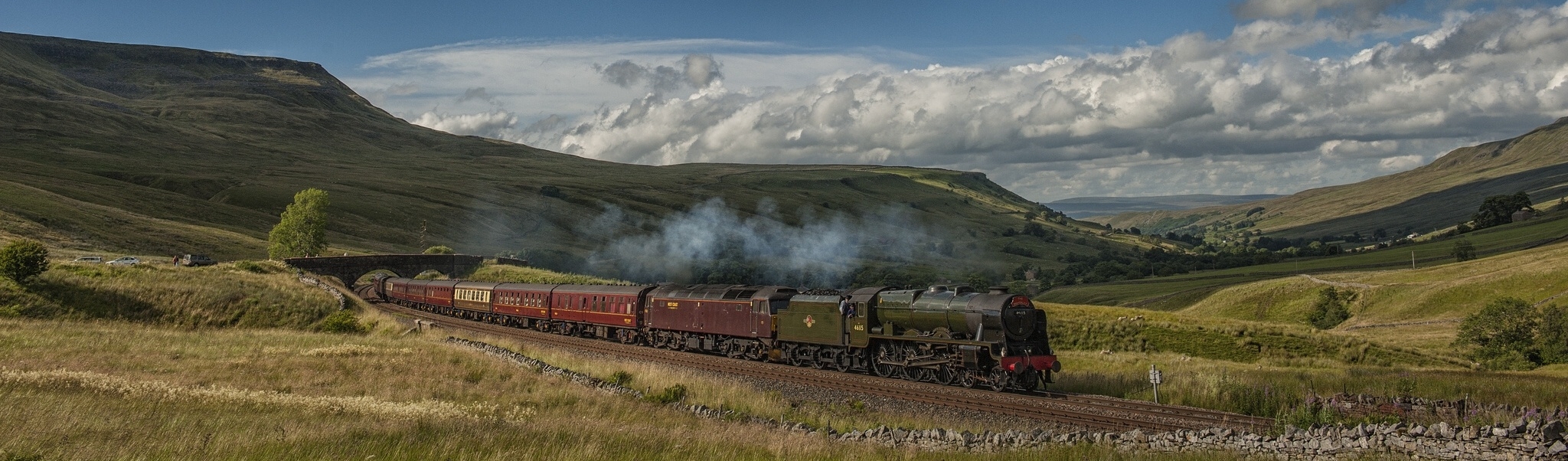
The first of the British Railways standard designs was a Pacific that was formally intended for mixed service. Categorized into power class 7MT, it got driving wheels of 6 feet and 2 inches (or 1,880 mm) to reach speeds up to 90 mph (145 km/h), but also to have enough pulling power for an occasional freight train. In reality, it almost always pulled express trains.
It used the experiences gathered from the 1948 locomotive exchanges carried out between the big four railway companies and had the aim to increase operating efficiency and reduce maintenance costs. To reduce the effort of everyday maintenance, it got a rocking grate, a self-cleaning smokebox and raised running plates to facilitate access to all parts. A somewhat lighter axle load was to be achieved to increase the route availability.
As usual, this standard design inherited many features from LMS locomotives. But some components like the boiler and trailing truck were also derived from the Bulleid Pacifics of the Southern Railway. It had only two cylinders on the outside, which were inclined a bit to fit larger cylinders into the British loading gauge. Between 1951 and 1954, a total of 55 locomotives was built in three batches with some improvements from batch to batch. After the first locomotive, No. 70000 was named “Britannia”, the further locomotives got the names of famous Britons, withdrawn GWR Star class locomotives and Scottish Firths.
In the beginning, the class had some teething issues which led to the first 25 locomotives being temporarily withdrawn. After the problems had been solved, they were generally well received by the crews. Only the crews in the former GWR area didn't like them because they were left-hand drive. The withdrawals of the class were between 1965 and 1968. Today, No. 70000 “Britannia” and No. 70013 “Oliver Cromwell” are preserved. While 70000 is currently operational and mainline certified, 70013 is being overhauled since 2018.