


Prussian P 42
German Reichsbahn class 360-4
The first two examples of the P 42 came from the series of eight trial locomotives that were already described in the article of the P 41. In contrast to the latter, they were powered by a two-cylinder compound engine, but otherwise they were largely identical.
Similar to the P 41 of the Erfurt variant, two P 42 of the Erfurt variant were built, which were delivered by Henschel in 1891 and took part in the testing of the different types. Since at that time there were still massive starting problems with compound engines with two cylinders, priority was given to the simple engines despite their poorer efficiency, so that no further P 42 of the first type were manufactured.
The problems could be solved after the Union foundry in Königsberg invented the Dultz starting device, which enabled the vehicle to start in any wheel position. Thus, in 1898, the production of a normalized design began, of which a total of 707 examples were to be built by 1910. Despite the only slightly increased weight, these were not only more economical than the P 41, but also more powerful.
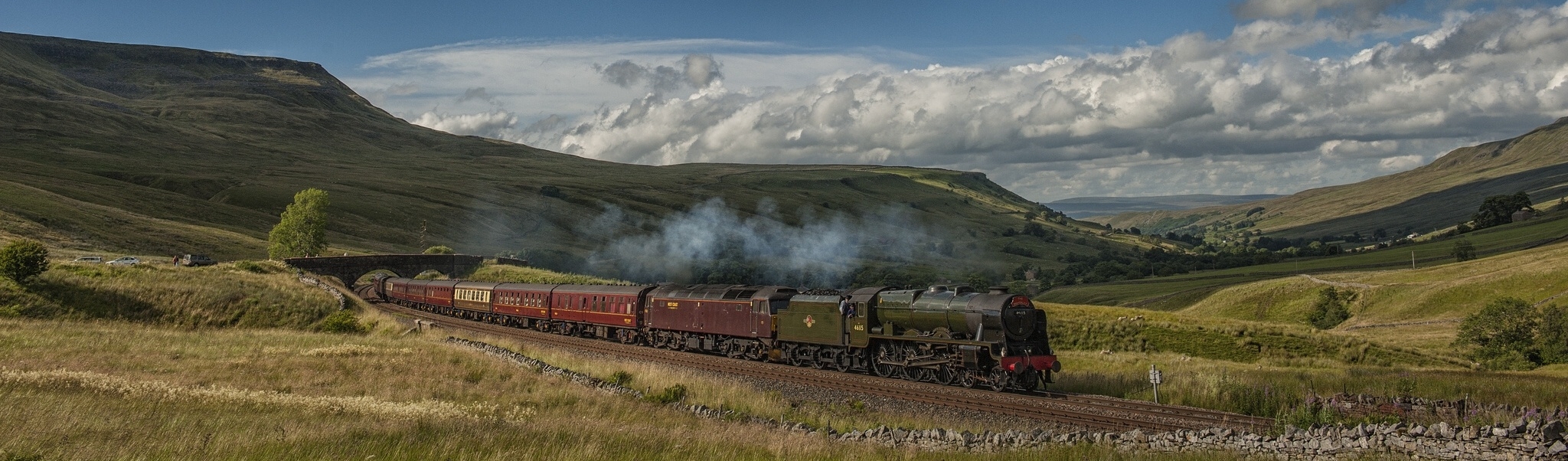
Like its predecessor, the P 42 was used in front of express trains, especially in the early days, but was later pushed out of this role by new locomotives. Mecklenburg, Oldenburg and the Lübeck-Büchener Eisenbahn also procured these locomotives, although the latter had ordered a variant with a shortened wheelbase. These reached quantities of 31, eight and five.
Of the 549 engines recorded in 1923, 437 were taken over by the Reichsbahn in 1925 and assigned the numbers 36 002 to 36 438. Most examples were retired by the start of World War II, but some returned from eastern areas during the war. Of the locomotives which survived the war, one was equipped by the Reichsbahn with coal dust firing and received a four-axle tender with 30 m³ of water. It was only retired in 1959 and was thus the last P 42.
Technical data
General
| Property | Erfurt variant | standard variant |
|---|---|---|
| Built | 1891 | 1889-1910 |
| Manufacturers | Henschel | Henschel, Humboldt, Linke |
| Wheel arrangement | 4-4-0 (American) | |
| Gauge | 1,435 mm (Standard gauge) | |
Dimensions and weights
| Property | Erfurt variant | standard variant |
|---|---|---|
| Length | 15.62 m | 17.61 m |
| Wheelbase | 7.40 m | |
| Total wheelbase | 14.71 m | |
| Empty mass | 43.1 t | 45.7 t |
| Service mass | 48.6 t | 51.2 t |
| Adhesion mass | 28.3 t | 30.2 t |
| Rigid wheelbase | 2.65 m | |
| Axle load | 14.2 t | 15.1 t |
| Water capacity | 12,000 l | 15,000 l |
| Fuel capacity | 5 t (coal) | |
Boiler
| Property | Erfurt variant | standard variant |
|---|---|---|
| Grate area | 2.3 m² | |
| Firebox surface | 9 m² | |
| Tube heating surface | 116 m² | 109 m² |
| Evaporative heating surface | 125 m² | 118 m² |
| Total heating surface | 125.0 m² | 118.0 m² |
Power plant
| Property | Erfurt variant | standard variant |
|---|---|---|
| Driver diameter | 1,730 mm | 1,750 mm |
| Boiler pressure | 12 bar | |
| Expansion type | compound | |
| Cylinders | two, HP: 440 x 600 mm and LP: 660 x 600 mm | two, HP: 460 x 600 mm and LP: 680 x 600 mm |
Power
| Property | Erfurt variant | standard variant |
|---|---|---|
| Power source | steam | |
| Indicated power | 440 kW (598 PS) | 427 kW (581 PS) |
| Top speed | 90 km/h | |
| Starting effort | 47.4 kN | 50.8 kN |
| Starting effort simple | 56.9 kN | 60.9 kN |
Calculated values
| Property | Erfurt variant | standard variant |
|---|---|---|
| Factor of adhesion | 1 : 5.86 | 1 : 5.83 |
| Optimal speed | 56 km/h | 51 km/h |
| Power-to-weight ratio | 9.1 kW/t | 8.3 kW/t |
| Heating Surface Equivalent | 170.0 m² | 163.0 m² |
| Cylinder volume/HSE | 1 : 1,140.40 | 1 : 1,280.15 |
| Adhesive weight/Total | 1 : 1.72 | 1 : 1.70 |
| Tractive force/Heating surface | 1 : 7.92 | 1 : 8.99 |
| Grate area/Heating surface | 1 : 54.35 | 1 : 51.30 |
| Firebox/Tube surface | 1 : 12.89 | 1 : 12.11 |