


Baden XIV
Baden IV a

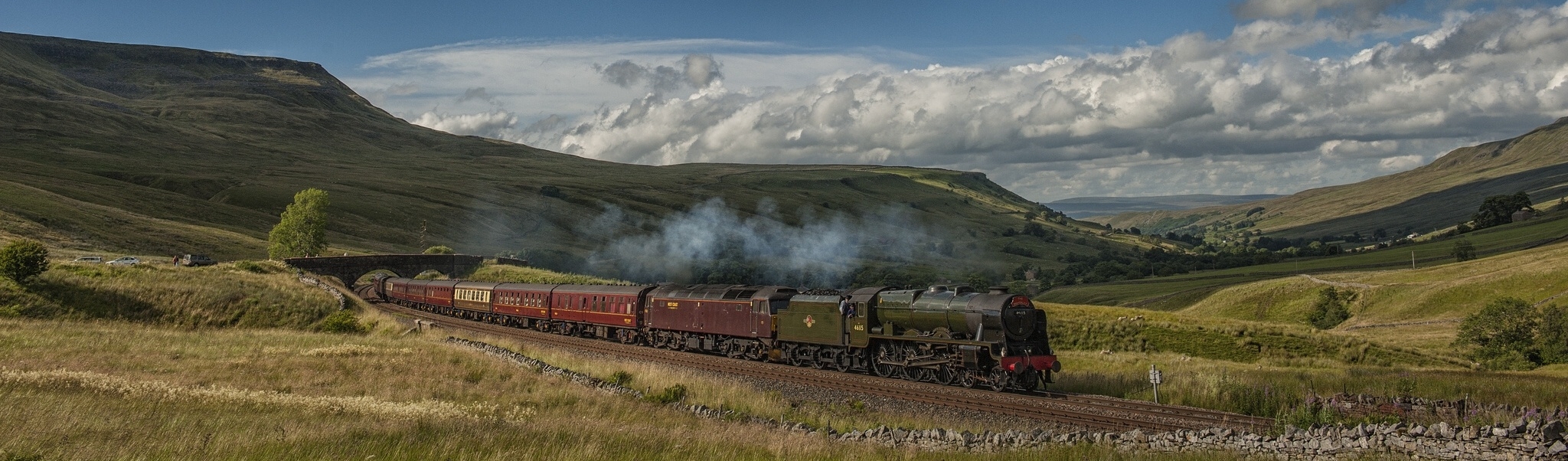
The class XIV was procured by the Grand Duchy of Baden State Railways from 1866 as a simply designed locomotive for slower passenger trains and possibly also for freight trains. In the new scheme of 1868 it was given the designation IV a. It is characterized by the fact that all were later rebuilt to tank locomotives.
The original model had only two driving axles and a two-axle tender. The driving wheels were fixed in an outside frame with outside cylinders. However, only the connecting and coupling rods were on the outside, while the valve gear was on the inside.
Because the entire weight of the locomotive was carried on the driving wheels, it had a high tractive effort and was also used to pull freight trains. Trains weighing more than 1,000 tons could be moved at 45 km/h on almost level lines. By 1868, 46 examples had been produced in three batches, which were manufactured by the Karlsruhe and Grafenstaden factories.
When significantly faster and more powerful tender locomotives became available in 1880, rebuilding of all engines to tank locomotives began. The cab was now closed all around and got a coal bunker on the back. Due to the resulting greatly increased overhang, a fixed trailing axle was installed, which means that the locomotives now had a 0-4-2 wheel arrangement. The water tanks were now on the side of the boiler, the latter also being new.
These rebuilds increased the service weight from 27 to 41.2 tonnes and by increasing the boiler pressure from 116 to 131 psi, the power could also be improved. Despite the trailing axle, there was still a large overhang, which meant that weight distribution was still a problem and repeatedly led to derailments. Thus, the withdrawals took place around 1900, when the rebuilding of the last locomotives was only 14 years ago.
Technical data
General
| Property | as built | rebuilt as tank engine |
|---|---|---|
| Built | 1866-1868 | 1880-1886 |
| Manufacturers | MBG Karlsruhe, Grafenstaden | |
| Wheel arrangement | 0-4-0 (Four-coupled) | 0-4-2T |
| Gauge | 1,435 mm (Standard gauge) | |
Dimensions and weights
| Property | as built | rebuilt as tank engine |
|---|---|---|
| Length | 13.35 m | 9.45 m |
| Wheelbase | 2.60 m | 4.30 m |
| Empty mass | 23.8 t | 32.6 t |
| Service mass | 27 t | 41.2 t |
| Adhesion mass | 27 t | |
| Rigid wheelbase | 2.60 m | 4.30 m |
| Axle load | 13.5 t | |
| Water capacity | 5,670 l | 3,800 l |
| Fuel capacity | 2 t (coal) | 1.5 t (coal) |
Boiler
| Property | as built | rebuilt as tank engine |
|---|---|---|
| Grate area | 1.16 m² | |
| Firebox surface | 6.19 m² | 5.34 m² |
| Tube heating surface | 81.11 m² | 81.75 m² |
| Evaporative heating surface | 87.3 m² | 87.09 m² |
| Total heating surface | 87.3 m² | 87.1 m² |
Power plant
| Property | as built | rebuilt as tank engine |
|---|---|---|
| Driver diameter | 1,680 mm | |
| Boiler pressure | 8 bar | 9 bar |
| Expansion type | simple expansion | |
| Cylinders | two, 435 x 610 mm | |
Power
| Property | as built | rebuilt as tank engine |
|---|---|---|
| Power source | steam | |
| Estimated power | 170 kW (231 PS) | 180 kW (245 PS) |
| Top speed | 63 km/h | |
| Starting effort | 46.7 kN | 52.6 kN |
Calculated values
| Property | as built | rebuilt as tank engine |
|---|---|---|
| Factor of adhesion | 1 : 5.67 | 1 : 5.04 |
| Optimal speed | 23 km/h | 21 km/h |
| Power-to-weight ratio | 6.3 kW/t | 4.4 kW/t |
| Heating Surface Equivalent | 118.3 m² | 113.8 m² |
| Cylinder volume/HSE | 1 : 1,533.30 | 1 : 1,593.40 |
| Adhesive weight/Total | 1 : 1.00 | 1 : 1.53 |
| Tractive force/Heating surface | 1 : 11.18 | 1 : 12.60 |
| Grate area/Heating surface | 1 : 75.26 | 1 : 75.08 |
| Firebox/Tube surface | 1 : 13.10 | 1 : 15.31 |