


Imperial-Royal State Railways class 210
Polish State Railways Pn11
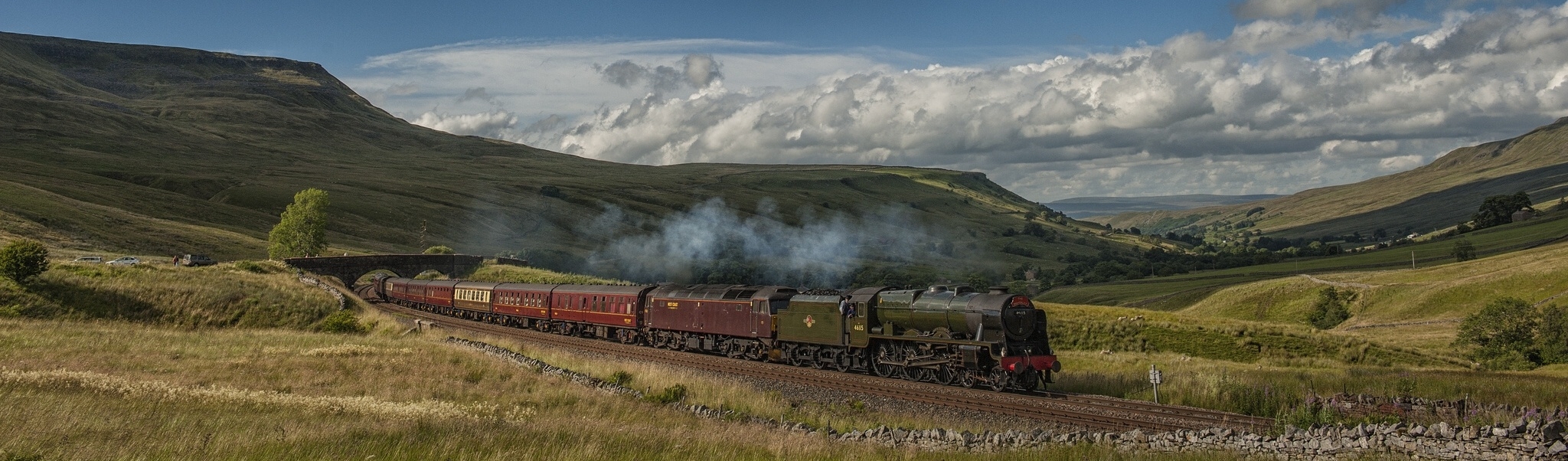
In view of the increased train weights after the turn of the century, Karl Gölsdorf felt compelled to develop an express locomotive with a high steaming capacity, taking into account the low-energy coal used in Austria and the permitted maximum axle load of 14.5 tonnes. The Pacific design was out of the question, since the 2-6-2 locomotive of the class 110 had already shown that a sufficiently large firebox while obeying the axle load limits could not be realized with a single trailing axle.
A grate area of around 4.6 square meters was required for the envisaged output of around 1,800 hp using Austrian coal. So Gölsdorf reversed the Pacific's wheel arrangement to fit a sufficiently large firebox over the rear bogie. The boiler was tapered so that the inner diameter at the front was 133 mm smaller than at the rear. Following the usual practice in Austria at that time, only a Clench steam dryer was installed instead of a smoke tube superheater.
In order to guarantee sufficient guidance in curves even without a leading bogie, the leading axle was connected to the first coupled axle to form a Krauss-Helmholtz bogie. The bogie was also suspended in front of its first axle like a drawbar, and its first axle could also be moved laterally by 20 mm to improve maneuverability in curves.
As with the class 110, a four-cylinder compound engine was used, which here had a slightly larger cylinder diameter. The high and low pressure cylinders on each side shared a common valve body cast in one piece. All cylinders acted on the second driving axle, with the wheels having a diameter of 2,140 mm designed for higher speeds. Approval was only for 100 km/h, which was sometimes exceeded in daily use.
The eleven locomotives were usually used with trains weighing 406 tonnes, with which they could easily reach the top speed. After their further development in the form of the class 310 was acquired, they were transferred from the Austrian heartland to Lemberg (Lviv). For this reason, the nine remaining after the First World War came to the PKP, where they were designated Pn11 and were later superheated. During the Second World War, the Reichsbahn classified the captured locomotives as 16 051 to 056, but these later returned to the PKP and were used until 1950.
Technical data
General
- Built
- 1908
- Manufacturers
- Floridsdorf, BMMF
- Wheel arrangement
- 2-6-4 (Adriatic)
- Gauge
- 1,435 mm (Standard gauge)
Dimensions and weights
- Length
- 21.53 m
- Length loco
- 13.14 m
- Wheelbase
- 10.45 m
- Total wheelbase
- 18.23 m
- Empty mass
- 77.1 t
- Service mass
- 83.8 t
- Adhesion mass
- 43.8 t
- Total mass
- 123 t
- Rigid wheelbase
- 4.44 m
- Axle load
- 14.6 t
- Water capacity
- 21,000 l
- Fuel capacity
- 8.7 t (coal)
Boiler
- Grate area
- 4.62 m²
- Firebox surface
- 15.1 m²
- Tube heating surface
- 207.45 m²
- Evaporative heating surface
- 222.55 m²
- Total heating surface
- 222.6 m²
Power plant
- Driver diameter
- 2,140 mm
- Boiler pressure
- 15 bar
- Expansion type
- compound
- Cylinders
- four, HP: 390 x 720 mm and LP: 660 x 720 mm
Power
- Power source
- steam
- Estimated power
- 1,100 kW (1,496 PS)
- Top speed
- 100 km/h
- Starting effort
- 96.7 kN
- Starting effort simple
- 116.1 kN
Calculated values
- Factor of adhesion
- 1 : 4.44
- Optimal speed
- 69 km/h
- Power-to-weight ratio
- 13.1 kW/t
- Heating Surface Equivalent
- 298.1 m²
- Cylinder volume/HSE
- 1 : 1,403.61
- Adhesive weight/Total
- 1 : 1.91
- Tractive force/Heating surface
- 1 : 9.08
- Grate area/Heating surface
- 1 : 48.17
- Firebox/Tube surface
- 1 : 13.74