


London & North Western class A
Great Britain 1893 111 produced
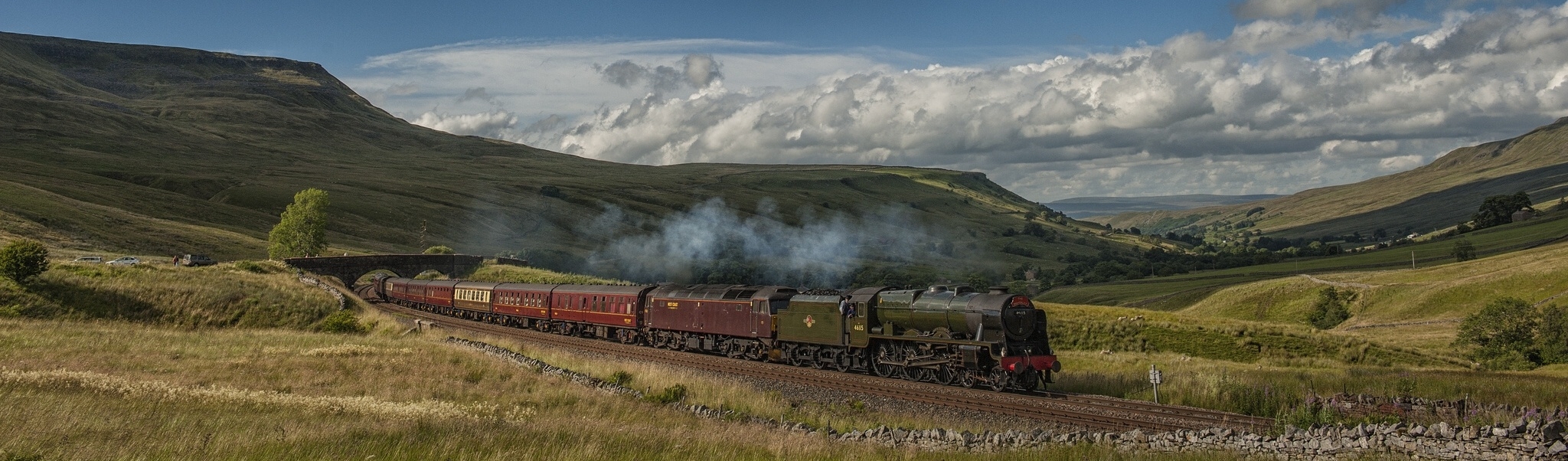
Between 1893 and 1900, Francis Webb built 111 class A 0-8-0 goods locomotives for the LNWR. Like earlier Webb compounds with two driving axles they had two small high-pressure cylinders on the outside and one larger low-pressure cylinder on the inside. But unlike these, all four axles of the class A were coupled.
Since Webb's successors Whale and Bowen Cooke wanted to clear the problems of the Webb compounds, they rebuilt the whole class into two-cylinder simple locomotives. So 15 became class C, 62 became class D and 34 became class C1. Most were again rebuilt to class G1 and some of these again to class G2a, with the last ones only being withdrawn in 1962.
Technical data
General
- Built
- 1893-1900
- Manufacturers
- Crewe
- Wheel arrangement
- 0-8-0 (Eight-coupled)
- Gauge
- 1,435 mm (Standard gauge)
Dimensions and weights
- Wheelbase
- 5.26 m
- Service mass
- 50.8 t
- Adhesion mass
- 50.8 t
- Rigid wheelbase
- 5.26 m
- Axle load
- 14.6 t
Boiler
- Grate area
- 1.905 m²
- Firebox surface
- 10.684 m²
- Tube heating surface
- 138.426 m²
- Evaporative heating surface
- 149.11 m²
- Total heating surface
- 149.1 m²
Power plant
- Driver diameter
- 1,346 mm
- Boiler pressure
- 12.1 bar
- Expansion type
- compound
- Cylinders
- three, HP: 381 x 610 mm and LP: 762 x 610 mm
Power
- Power source
- steam
- Estimated power
- 522 kW (710 PS)
- Starting effort
- 80.9 kN
- Starting effort simple
- 97.1 kN
Calculated values
- Factor of adhesion
- 1 : 6.16
- Optimal speed
- 40 km/h
- Power-to-weight ratio
- 10.3 kW/t
- Heating Surface Equivalent
- 202.5 m²
- Cylinder volume/HSE
- 1 : 1,544.22
- Adhesive weight/Total
- 1 : 1.00
- Tractive force/Heating surface
- 1 : 11.33
- Grate area/Heating surface
- 1 : 78.27
- Firebox/Tube surface
- 1 : 12.96