


State Railway Company class 36.5
Imperial-Royal State Railways class 109

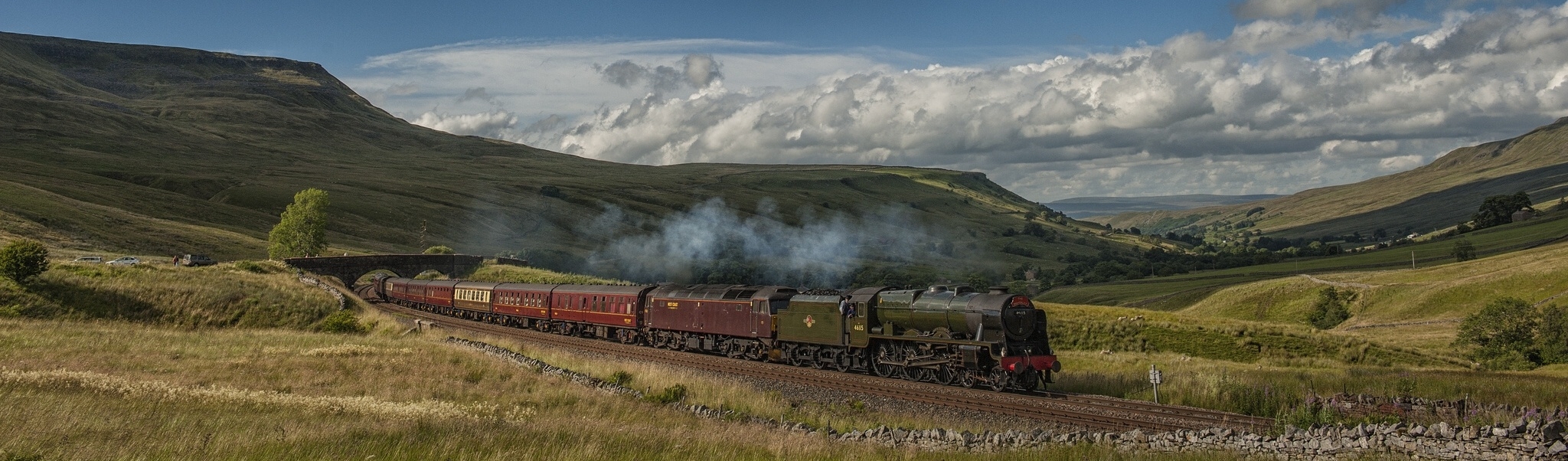
At the turn of the century, the Austrian StEG was one of many railways which were faced with the problem that their four-coupled express locomotives were overwhelmed with the increased train weights. In this case, the class 26 4-4-0 often had to be used double-headed. So the class 36.5 was designed with the 4-6-0 wheel arrangement and a von Borries four-cylinder compound.
The StEG built ten in 1902 and four more in 1904 in their own works in Vienna. They took over the Orient Express and other important expresses from the class 26. After World War I, all 14 got to the BBÖ and were designated class 109. In the following time, they were also used for regular passenger trains. They were retired by 1934.
Technical data
General
- Built
- 1902, 1904
- Manufacturers
- StEG
- Wheel arrangement
- 4-6-0 (Ten-wheeler)
- Gauge
- 1,435 mm (Standard gauge)
Dimensions and weights
- Length loco
- 11.78 m
- Wheelbase
- 8.68 m
- Empty mass
- 58.4 t
- Service mass
- 64.9 t
- Adhesion mass
- 42.5 t
- Rigid wheelbase
- 4.20 m
- Axle load
- 14.2 t
- Water capacity
- 13,200 l
- Fuel capacity
- 8.3 t (coal)
Boiler
- Grate area
- 3.1 m²
- Firebox surface
- 12.8 m²
- Tube heating surface
- 173.2 m²
- Evaporative heating surface
- 186 m²
- Total heating surface
- 186.0 m²
Power plant
- Driver diameter
- 1,820 mm
- Boiler pressure
- 13 bar
- Expansion type
- compound
- Cylinders
- four, HP: 350 x 650 mm and LP: 580 x 650 mm
Power
- Power source
- steam
- Estimated power
- 650 kW (884 PS)
- Top speed
- 80 km/h
- Starting effort
- 70.9 kN
- Starting effort simple
- 85.1 kN
Calculated values
- Factor of adhesion
- 1 : 5.88
- Optimal speed
- 56 km/h
- Power-to-weight ratio
- 10.0 kW/t
- Heating Surface Equivalent
- 250.0 m²
- Cylinder volume/HSE
- 1 : 1,187.24
- Adhesive weight/Total
- 1 : 1.53
- Tractive force/Heating surface
- 1 : 7.96
- Grate area/Heating surface
- 1 : 60.00
- Firebox/Tube surface
- 1 : 13.53