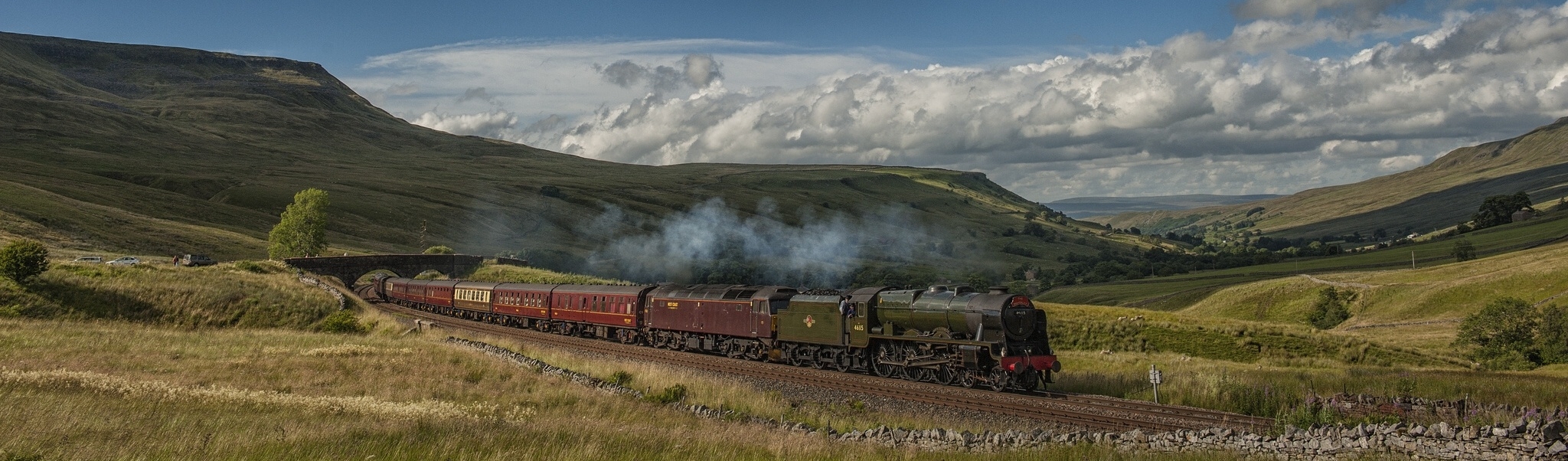



Tender Locomotives 0-4-0 „Four-coupled”
UIC Classification B

One of the simplest types of steam locomotives is the wheel arrangement 0-4-0, which stands for a locomotive with two driven axles and no carrying axles. The following designations exist in the different naming systems:
Four-coupled
UIC: B
Whyte: 0-4-0
Switzerland: 2/2
France: 020
Turkey: 22
The first Trevithick locomotives had two axles that were connected to each other. There, a large gear wheel was responsible for ensuring that both axes always rotated synchronously. Stephenson was the first to use the well-known design with coupling rods to also drive the second axis to create the “Locomotion No. 1”. In the years that followed, the 0-4-0 wheel arrangement was popular for all applications that required high traction. Edward Bury in particular earned a big success with his bar frame 0-4-0s.
The biggest advantage of the 0-4-0 wheel arrangement was that the entire weight of the locomotive was available for traction. With increasing speed, however, it became clear that the smooth running of a locomotive without carrying axles didn't convince. The weight of the locomotives was also limited by the two axles, so that with the increasing weight of the trains, no sufficiently large boilers could be carried. The solution usually consisted of adding a rigidly mounted carrying axle either before or after the coupled axles, which improved guidance at high speeds and in curves and allowed a higher weight.
From around 1850, the 0-4-0 wheel arrangement was hardly ever used for new tender locomotives, while tank locomotives with this wheel arrangement were used in large numbers on branch lines, narrow-gauge railways, industrial plants and for shunting. Only in the USA later still locomotives with a 0-4-0 wheel arrangement were built for shunting tasks, since the high permitted axle loading still allowed to build powerful locomotives. The Pennsylvania Railroad was the last company to purchase what was known locally as the 0-4-0 Switcher. With the class A5s, the heaviest two-axle steam locomotive of all time was designed, which reached a weight of almost 132.000 pounds and was built until 1924.
Locomotives
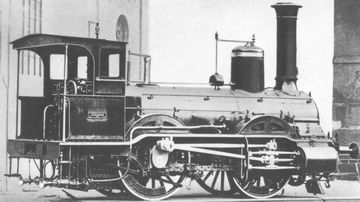
Baden XIV
Germany
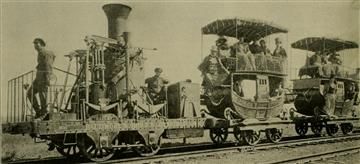
Baltimore & Ohio Grasshopper “Atlantic”
United States
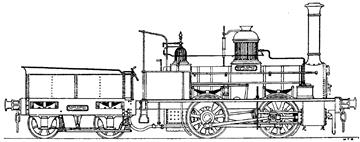
Cambrian Railways No. 2 “Ruthin”
Great Britain
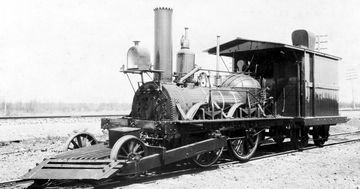
Camden & Amboy Railroad “John Bull”
United States
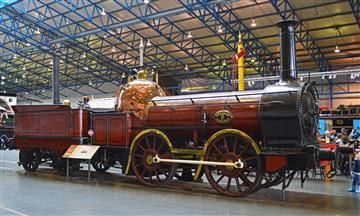
Furness Railway No. 1 to 4 “Old Coppernob”
Great Britain

Mohawk & Hudson “DeWitt Clinton”
United States

Oldenburg G 1
Germany
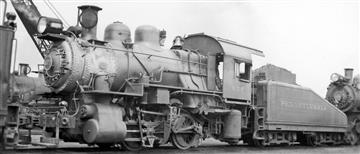
Pennsylvania class A5s
United States
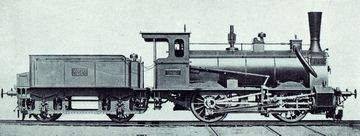
Prussian G 1
Germany
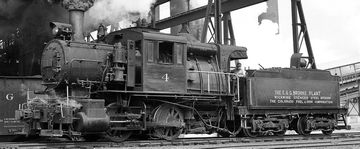
Philadelphia & Reading class A-4
United States
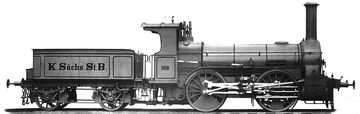
Saxon VII (Schwartzkopff type)
Germany
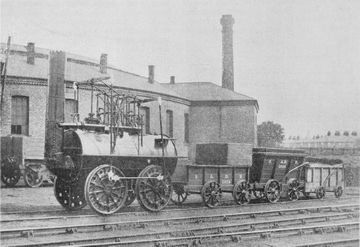
Stockton & Darlington No. 1 “Locomotion”
Great Britain
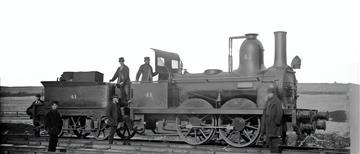
Stockton & Darlington No. 41 “Dart”
Great Britain

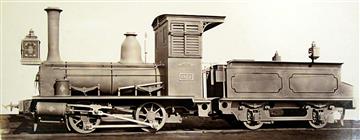

Furness Railway class 17
Great Britain
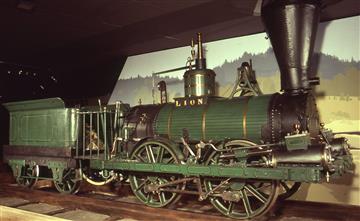
Whitneyville & Machiasport “Lion”
United States