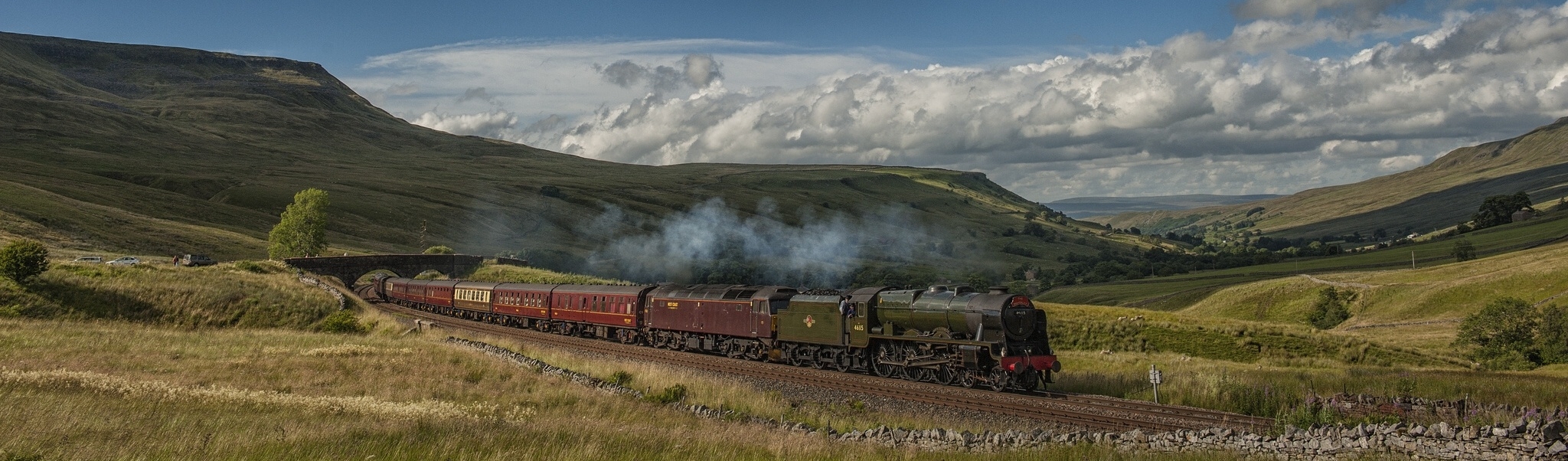



Tender Locomotives 4-6-4 “Hudson”, “Baltic”
UIC Classification 2'C2'
The wheel arrangement 4-6-4 designates a steam locomotive that has a two-axle leading bogie, three coupled axles and a two-axle trailing bogie. In different countries, this wheel arrangement is referred to as follows:
Baltic, Hudson
UIC: 2'C2'
Whyte: 4-6-4
Switzerland: 3/7
France: 232
Turkey: 37
The 4-6-4 evolved from the 4-6-2 “Pacific” by exchanging the single trailing axle for a two-axle bogie or truck. This allowed to use an even larger firebox that produced more steam when running at high speeds. Since now only three out of seven axles were driven, not much more than half of the locomotive's weight could be used as adhesion weight. This made this type of locomotives suited for fast and heavy trains on relatively flat lines. This wheel arrangement was also successful among tank locomotives, where the trailing bogie allowed for larger supplies, combined with good running characteristics in both directions of travel.
The first two 4-6-4 tender locomotives were built in 1911 by Gaston du Bousquet for the French Nord. Since these were ordered for part of a Paris-Saint Petersburg express, this wheel arrangement was called “Baltic” after the Baltic Sea. But in the next years the French continued to build efficient Pacifics and only eight more Baltics were built in the years after the founding of the SNCF. These were three 232 R and four 232 S ordered in 1938 by the Nord and the 232 U that followed in 1949.
In the USA, the first class of 4-6-4 locomotives to enter service was the J-1a of the New York Central in 1927. These were named “Hudsons” after the river on whose shores they were supposed to operate and were the reason why this wheel arrangement was also given this name in North America. Especially in the thirties, railroads in the USA, Canada and Mexico ordered Hudsons, some of which were streamlined. In total, North American railroads ordered nearly 500 Hudsons, of which 275 were of the New York Central classes J-1, J-2 and J-3.
In Britain, the only 4-6-4 was the W1 “Hush-hush” built for the LNER, although it in fact had two independent trailing axles. The German Reichsbahn only built three of the streamlined class 05 of which one reached 124.5 mph or 200.4 km/h in 1936. In India, two operators had a small number of narrow gauge 4-6-4 locomotives. Larger numbers were reached in Japan, where 82 locomotives of the classes C61 and C62 were built between 1947 and 1949. 47 of the class C60 were later rebuilt from class C59 Pacifics. The Victorian Railways in Australia were probably the last customers of new 4-6-4 tender locomotives with the class R in 1951.

Locomotives
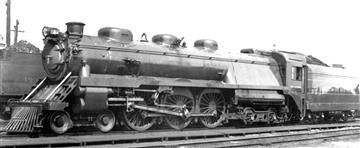
Baltimore & Ohio class V-2 No. 2 “Lord Baltimore”
United States

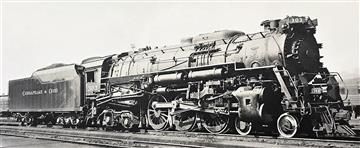
Chesapeake & Ohio class L-2
United States
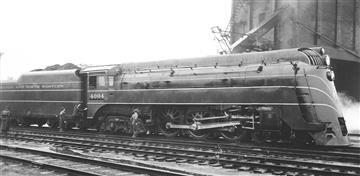
Chicago & North Western class E-4
United States

German Reichsbahn class 05
Germany
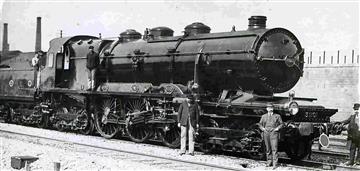
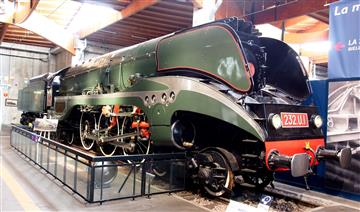
French State Railway 232 U
France
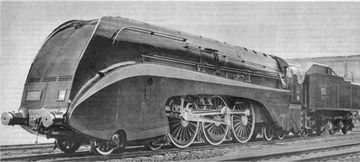
French State Railway 232 R
France
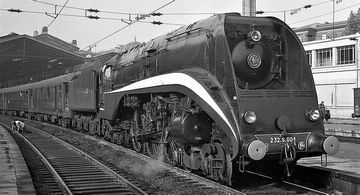
French State Railway 232 S
France
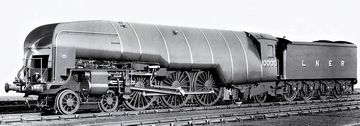
London & North Eastern class W1 “Hush-Hush”
Great Britain
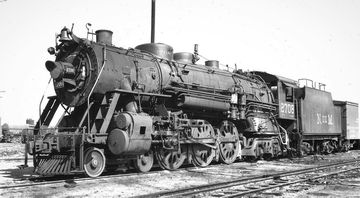
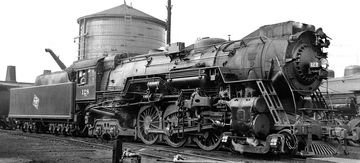
Milwaukee Road class F6
United States
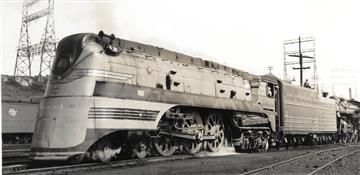
Milwaukee Road class F7
United States
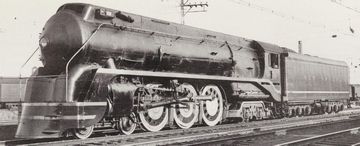
New Haven class I-5
United States
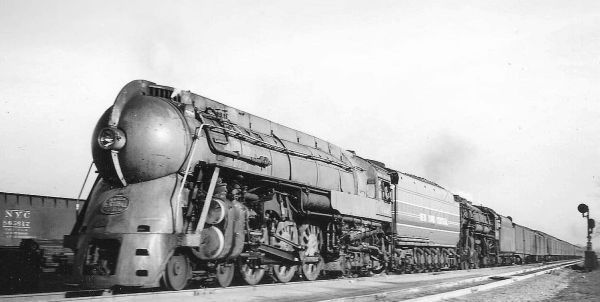
New York Central classes J-1 to J-3 “Hudson”
United States
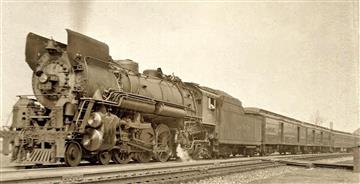
Nickel Plate Road class L-1
United States

Santa Fe class 3460
United States
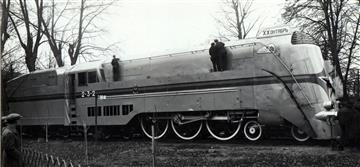
Soviet Railways series 2-3-2К
Soviet Union
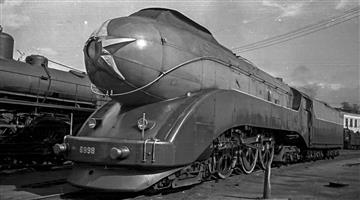
Soviet Railways No. 6998
Soviet Union

Victorian Railways class R
Australia
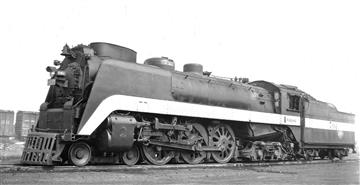
Wabash class P-1
United States