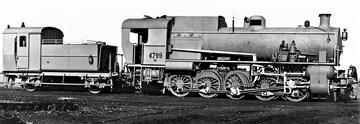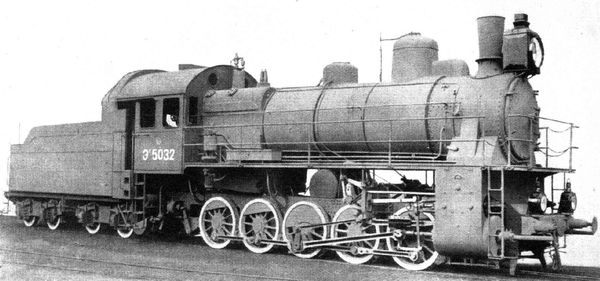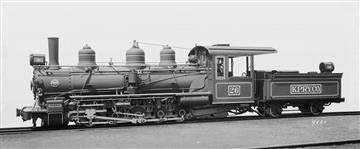



Tender Locomotives 0-10-0 “Ten-coupled”
UIC Classification E
The wheel arrangement 0-10-0 designates a steam locomotive with five coupled axles and no leading or trailing axles. In different countries, this wheel arrangement is referred to as follows:
UIC: E
Whyte: 0-10-0
Switzerland: 5/5
France: 050
Turkey: 45
The 0-10-0 can basically be seen as an enlargement of the 0-8-0 with an additional coupled axle. Since the entire weight of the locomotive rested on the coupled axles, a high proportion of the total mass was available as adhesive weight. This made the type particularly suitable for hauling heavy freight trains at relatively low speeds and for duties on steep gradients.
The main challenge in the construction of an 0-10-0 was the long wheelbase of the five coupled axles. With all axles rigidly mounted in the frame, such a locomotive would have required very large curve radii and would have exerted considerable lateral forces on the track. For this reason, various solutions were used to improve curve negotiation. These included lateral play of individual axles, flangeless wheels and systems in which the first and last coupled axles could move laterally and guide the locomotive through curves.
Compared with types that had leading or trailing axles, the 0-10-0 was relatively rare. The absence of carrying axles made it possible to use almost the entire locomotive weight for adhesion, but it also limited the space available for a large firebox and made the running characteristics less suitable for higher speeds. For locomotives that required five coupled axles but also had to reach higher speeds or develop greater sustained power, wheel arrangements such as the 2-10-0 and 2-10-2 were usually more suitable.
The 0-10-0 found its greatest use in countries where heavy freight traffic had to be handled on lines with relatively low axle loads. Germany was one of the best-known users with the Prussian G 10, of which several thousand were built from 1910. Its five coupled axles allowed a high adhesive weight while keeping the individual axle load moderate, and locomotives of this type were also supplied to or later operated in several other European countries.
Other 0-10-0 locomotives were built for railways in Europe and Asia, while the type remained uncommon in North America. There, heavy freight locomotives usually had at least a leading axle, resulting in types such as the 2-10-0 “Decapod”. Nevertheless, the 0-10-0 represented one of the simplest ways of combining five coupled axles with maximum adhesive weight and became an important heavy freight type on some European railway networks.

Locomotives
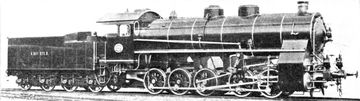
Bavarian G 5/5
Germany

Yugoslav State Railway No. 1932 to 1937
Yugoslavia
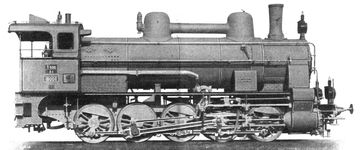
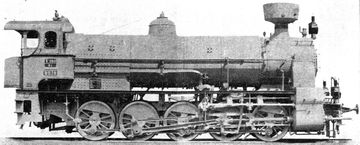
Imperial-Royal State Railways class 80
Austria-Hungary
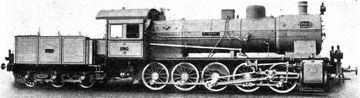
Prussian G 10
Germany
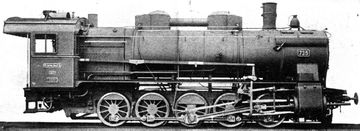
Saxon XI V, XI H and XI HV
Germany
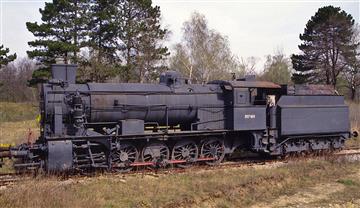

Württemberg G
Germany

Württemberg H and Hh
Germany