


Tank Locomotives 2-4-0T
UIC Classification 1B and 1'B

Tank locomotives of the 2-4-0T wheel arrangement combined the increased traction of two driving axles with the better running characteristics provided by the leading axle. The following designations exist in the different naming systems:
UIC: 1B t or 1'B t
Whyte: 2-4-0T
Switzerland: E 2/3
France: 120 T
Turkey: 23
Historically, the creation of this wheel arrangement could either be traced back to the addition of a second driving axle to a 2-2-0T or to the addition of the leading axle to a 0-4-0T. The first locomotives of this type appeared as early as the middle of the 19th century. This combination proved particularly useful for small passenger and freight trains on secondary lines. Initially, the leading axle was often rigidly mounted in the frame.
With the increasing availability of more powerful tank locomotives, the 2-4-0T was mainly used for light and medium-duty services. In Great Britain, numerous examples were built for suburban and branch line service, while in Germany, Austria and other European countries they were also used with small passenger and freight trains. The design was sometimes derived from standardized locomotive types offered by manufacturers and was built for different gauges.
On later locomotives, the leading axle was often designed as a Bissel axle. This changed the rigid 1B UIC arrangement into the radially adjustable 1'B arrangement and improved the riding characteristics on curves. A well-known example is the Bavarian Pt 2/3, whose leading axle was designed to move laterally. The combination of low weight, simple construction and sufficient power made this wheel arrangement particularly suitable for economical operation of light trains.
Although the 2-4-0T was later largely replaced by more powerful three- and four-coupled tank locomotives, it remained in use for a long time on secondary lines and with smaller railway companies as well as industrial and works railways. In some cases, older locomotives were also rebuilt later or modified with additional carrying axles to meet changing operating requirements.
Locomotives
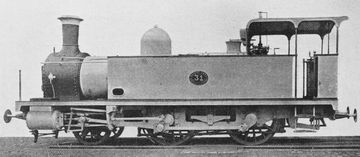
Antwerpen & Gent No. 30 and 31
Belgium
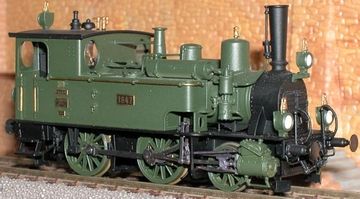
Bavarian D IX
Germany
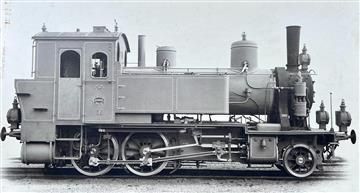
Bavarian Pt 2/3
Germany
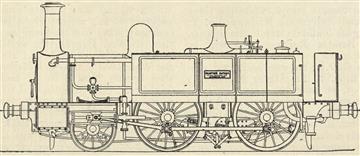
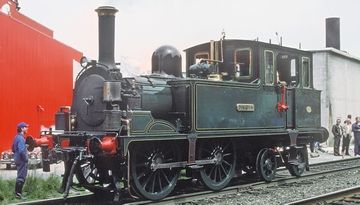
Duke of Sutherland's Railway “Dunrobin” (II)
Great Britain
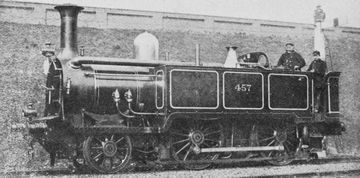
Great Western Railway class 455 “Metropolitan Tanks”
Great Britain
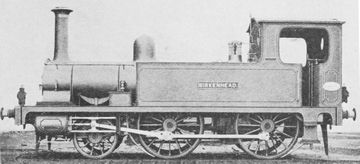

Hungarian Western Railway No. 61 to 72
Austria-Hungary
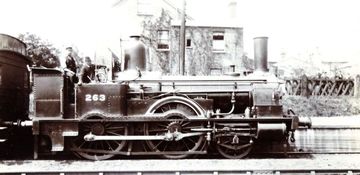
London & South Western class 0298 “Beattie well tanks”
Great Britain
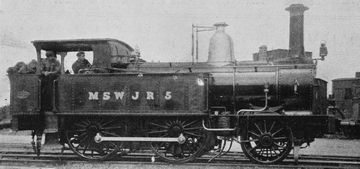
Midland & South Western Junction No 5 to 7
Great Britain
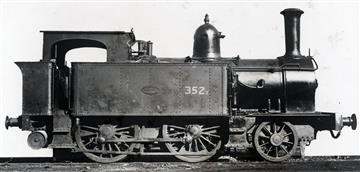
New South Wales class F351
Australia
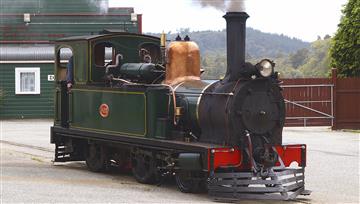
New Zealand Railways class L
New Zealand
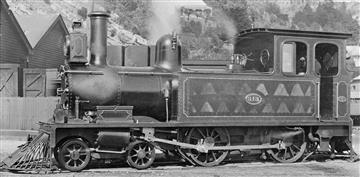
New Zealand Railways class LA
New Zealand
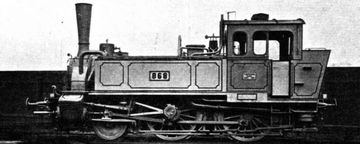
Prussian T 2 and T 4 - 2-4-0
Germany
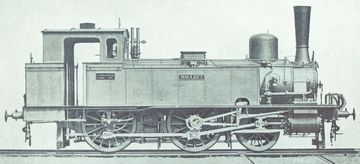
Prussian T 4
Germany
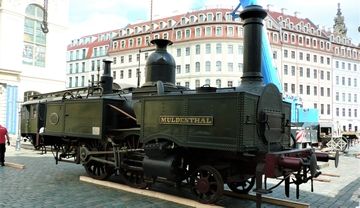
Saxon H IV b T, later IIb T
Germany