


Tank Locomotives 2-2-2T
UIC Classification 1A1
2-2-2T tank locomotives had one carrying axle ahead of and one behind their single driving axle. They were derived from tender locomotives of the same wheel arrangement that was widespread during the early development of steam locomotives and retained its combination of large driving wheels, low weight and good riding characteristics. The following designations exist in the different naming systems:
UIC: 1A1 t
Whyte: 2-2-2T
Switzerland: E 1/3
France: 111 T
Turkey: 13
The first locomotives of this type appeared as early as the middle of the 19th century. The carrying axles allowed smooth running at speed, while the large driving wheels made relatively high speeds possible. As tank locomotives, the arrangement also had the advantage of requiring only a single driving axle while retaining a compact design. It was therefore particularly suitable for light passenger trains, where low weight and good riding characteristics were more important than high tractive effort.
Unlike the 2-4-0T tank locomotives developed at the same time, however, the 2-2-2T remained a rare design. As locomotives with two coupled axles became increasingly important, 2-2-2T tank locomotives were mainly built for special duties and light branch or suburban trains. An early example was the “Pioneer”, built for the Cumberland Valley Railroad in 1851 for passenger trains with only a few coaches. The “Express” and “Fairy Queen”, built for the East Indian Railway in 1855, were likewise intended for passenger and mail service.
As train weights increased, however, the low adhesive weight became a disadvantage. The design was therefore soon superseded by locomotives with two or more coupled axles. Some 2-2-2T locomotives nevertheless remained in service for several decades. Several were rebuilt more than once and in some cases received a completely different wheel arrangement, such as the “Aerolite” of the North Eastern Railway, which was later rebuilt as a 4-2-2T and eventually as a 2-2-4T.
Today, 2-2-2T tank locomotives are among the rarest representatives of the early steam locomotive era. The preserved “Fairy Queen” is one of the oldest operational steam locomotives in the world and still illustrates the original purpose of this unusual wheel arrangement.
Locomotives
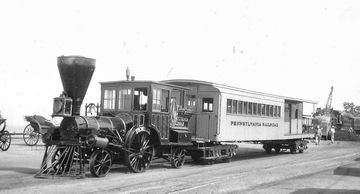
Cumberland Valley No. 13 “Pioneer”
United States
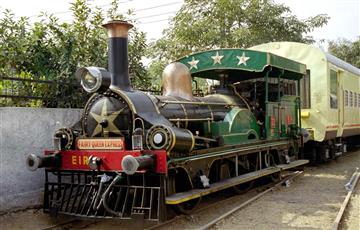
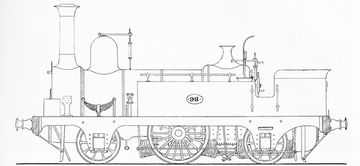
London, Brighton & South Coast Craven No. 98
Great Britain
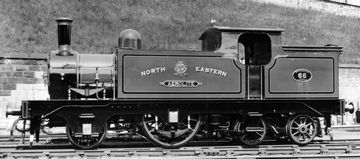
North Eastern No. 66 “Aerolite”
Great Britain