


Steam Locomotives of the Great Northern Railway (GNR)
The Great Northern Railway was founded in 1846 to build a line from London to York. Operations on the first section began as early as March 1848. At that time, some lines of other railway companies were used by securing the trackage rights. The section from London to Peterborough was fully opened as early as in 1850. The following year construction began on King's Cross station in London, which opened in 1852. The main line of the GNR finally joined the line of the North Eastern Railway to the north of Doncaster.
Today it forms part of the East Coast Main Line, which connects to Edinburgh. From the 1870s the GNR operated the Flying Scotsman there in cooperation with the North Eastern and North British. Here the GNR express locomotives were able to show off their high travel speeds on their section. The world's first dining cars were introduced there in 1879, and continuous vacuum brakes were also installed from 1881.
Over time, more and more connections to cities off the main line were made. The most important of these were Leicester, Nottingham, Manchester and Sheffield. In the 1860s several suburban lines in London were bought up. An increasingly important task was the transport of coal from the mining areas in Nottinghamshire, Derbyshire and Yorkshire. The delivery of ever-increasing quantities of coal to London soon brought in the company's largest revenue. Furthermore several joint railways were operated together with other railway companies.
The first chief mechanical engineer was Benjamin Cubitt, who died after only a short time on duty. He was succeeded in 1850 by Archibald Sturrock, who had learned his trade at the GWR under Gooch and would design more than a dozen locomotives for the GNR. He accompanied the company during a period of great growth, in which the number of employees increased more than tenfold.
His successor from 1866 was Patrick Stirling, who was known for his Singles with a wheel diameter of eight feet and one inch or 2.464 mm. These express locomotives could already reach 85 mph (137 km/h) and set records in the 1895 “Race to the North” with average speeds of more than 60 mph (97 km/h).
After Stirling's death in 1895, he was succeeded by Henry Alfred Ivatt, who became known for the technical innovations he was the first to introduce in Great Britain. These were the Atlantic express locomotive in 1898, the superheater in 1908 and also the Walschaerts valve gear.
In 1911 Nigel Gresley took over the post. One of his first achievements was the introduction of “Quad Art” type commuter trainsets. These were four-car, permanently connected passenger coaches which rested on common Jacobs bogies and thus saved weight. For the ever-increasing coal traffic to London, he was one of the first in Great Britain to introduce freight locomotives with a 2-8-0 wheel arrangement. In 1922, shortly before the grouping, he developed the A1 class Pacific, which was the first proven to reach a speed of 100 mph (161 km/h) in regular service. He later continued to make a name for himself with the LNER with extra fast steam locomotives when the A4 “Mallard” reached 126 mph (203 km/h).
When the British railway administrations were grouped in 1923, the Great Northern became part of the London & North Eastern. Now the entire East Coast Main Line was under the control of a single company. Gresley was able to assert himself as chief engineer of the entire company and retained this title until his death in 1941.


Locomotives
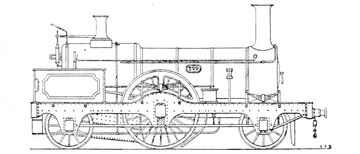
Great Northern (UK) Sturrock 7 ft Singles
Great Britain
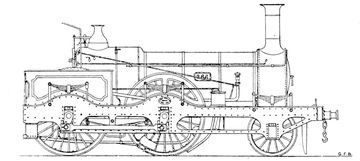
Great Northern (UK) No. 264 to 269
Great Britain
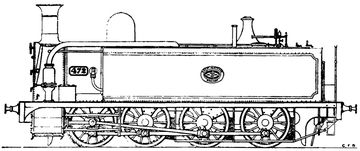
Great Northern (UK) No. 472 and 473
Great Britain
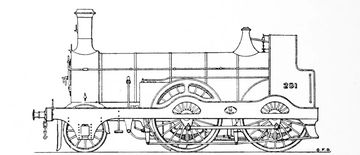
Great Northern (UK) Stirling 2-4-0
Great Britain
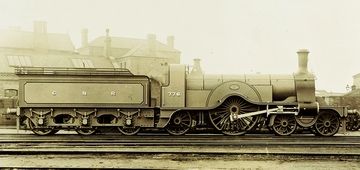
Great Northern (UK) Stirling Single
Great Britain
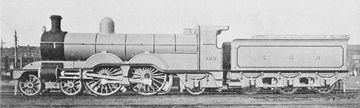
Great Northern (UK) class C1 (small boiler) “Klondykes”
Great Britain
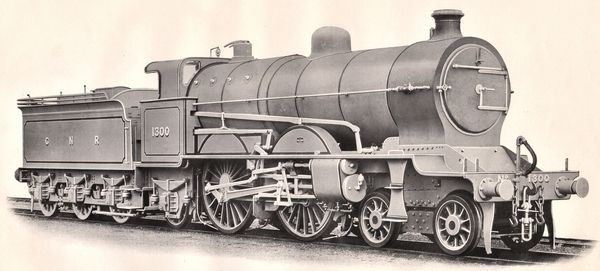
Great Northern (UK) class C1 (large boiler)
Great Britain
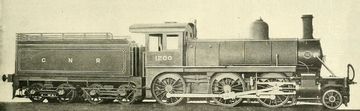
Great Northern (UK) class H1
Great Britain
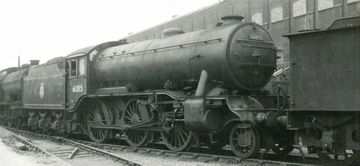
Great Northern (UK) class H4
Great Britain
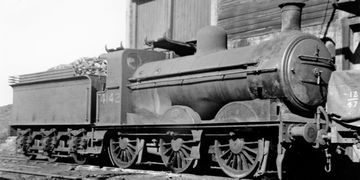
Great Northern (UK) classes J5 and J4
Great Britain
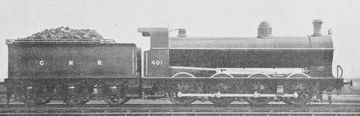
Great Northern (UK) class K
Great Britain

Great Northern (UK) class L1
Great Britain
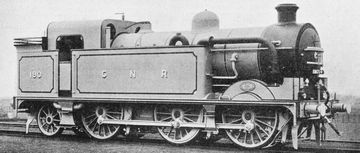
Great Northern (UK) class N1
Great Britain

Great Northern (UK) class N2
Great Britain
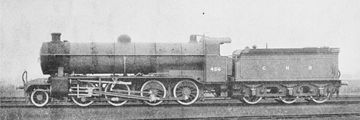
Great Northern (UK) class O1 “Tangos”
Great Britain
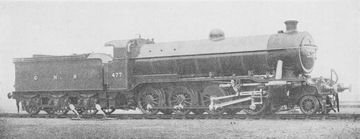
Great Northern (UK) class O2
Great Britain
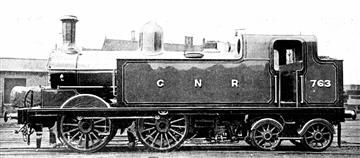
Great Northern (UK) class 120
Great Britain