


German Standard Steam Locomotives (Einheitsloks)

The German Reichsbahn created the standard locomotive program for the construction of new locomotives shortly after its founding in the early twenties. The aim was to develop the largest possible number of classes for different fields of service with a large number of identical parts, economical production, simple maintenance and a long service life. Richard Paul Wagner, who was head of the design department from 1922, was in charge here and shaped many of the basic features of the standard locomotives. Even in English-speaking countries, the German term “Einheitsloks” became popular.
A central element was the bar frame, which Wagner was able to experience on his study trips to the USA and which the Bavarian State Railway had also used. Due to its lower overall height, one had a freer hand in the design of the boiler and could use a firebox with more advantageous proportions. Even the cabs, smoke deflectors and other externally visible parts made the Einheitsloks easily recognizable virtually instantly. On the inside, the steam paths were streamlined in order to optimize power and consumption without much effort.
In order to reduce production costs and simplify maintenance, compound expansion was not used and the higher consumption with simple expansion was accepted. This was preceded by test runs with the two-cylinder class 01 express locomotives and the four-cylinder compound class 02. Since the 02 was only marginally more fuel efficient, the additional cost of the engine was not considered justified. Some have argued that the 02's engine was deliberately designed with less design effort to achieve the desired result. The use of a third inner cylinder with simple expansion was also avoided as far as possible and only implemented in locomotives that required particularly smooth running at high speeds or high loads.
It was noticeable that the boilers of the standard locomotives were very long. The lack of a combustion chamber resulted in excessively long tubes and flues, which caused problems due to stresses with temperature differences. Later, the boilers were made of the harder steel alloy St 47k, so that they could be operated at 20 or even 25 bars instead of 16 bars. Later, the pressure had to be reduced again, as it was only then recognized that this steel became brittle over time and dangerous hairline cracks formed.
In general, later innovations in steam locomotive construction often did not catch on with the standard locomotives in order not to have to modify the production facilities designed for mass production too much. Especially with the blast pipes, the traditional design was retained and no variable, cloverleaf-shaped or Kylchap blastpipes were used. One refused to install mechanical stokers to feed the grate and therefore relied on the muscle power of the firemen. With the most powerful locomotives, it was not uncommon for two firemen to be used at the same time in order to be able to shovel enough coal.
One of the central points was the simplification of the production of existing locomotive types and the rationalization of the production process. The Gemeinschaft Großdeutscher Lokomotivfabriken (“Association of Greater-German Locomotive Builders”) was founded in order to manufacture different parts in individual plants and then assemble them in another plant. The simplification of the locomotives led first to the transitional war locomotives (“Übergangskriegslokomotiven”) and then to the war locomotives (“Kriegslokomotiven”), in which many parts were made more simply and other parts which were not necessary for operation were omitted. The resulting higher consumption was accepted. The service life of the individual locomotives could also be shorter, since they were considered dispensable after the expected victorious end of the war.
Locomotives
German Reichsbahn class 01
Germany
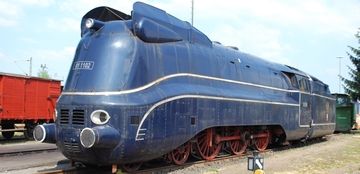
German Reichsbahn class 0110
Germany
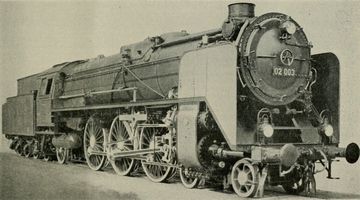
German Reichsbahn class 02
Germany
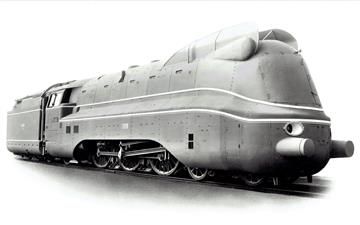
German Reichsbahn class 0310
Germany
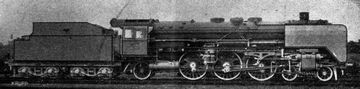
German Reichsbahn class 04
Germany

German Reichsbahn class 05
Germany
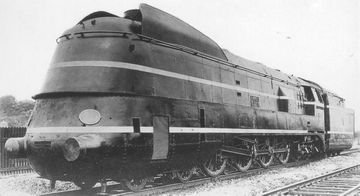
German Reichsbahn class 06
Germany

German Reichsbahn class 23
Germany
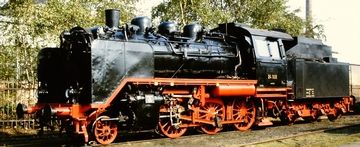
German Reichsbahn class 24
Germany

German Reichsbahn class 41
Germany
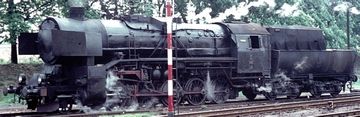
German Reichsbahn class 42
Germany
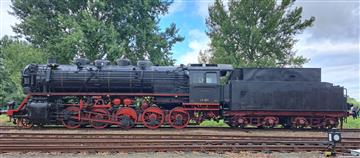
German Reichsbahn class 43
Germany
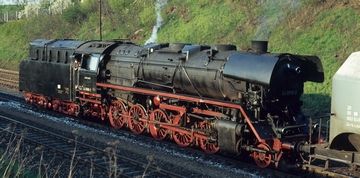
German Reichsbahn class 44
Germany
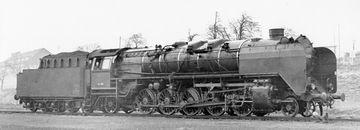
German Reichsbahn class 45
Germany
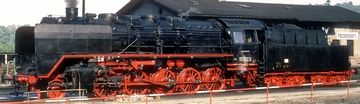
German Reichsbahn class 50
Germany
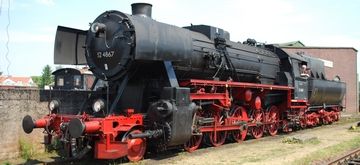
German Reichsbahn class 52
Germany

German Reichsbahn class 62
Germany
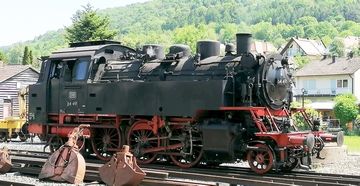
German Reichsbahn class 64
Germany
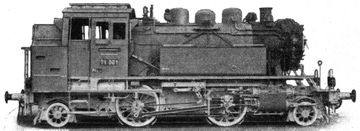
German Reichsbahn class 710
Germany
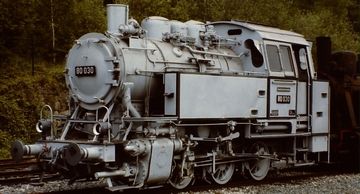
German Reichsbahn class 80
Germany
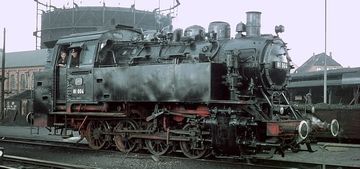
German Reichsbahn class 81
Germany
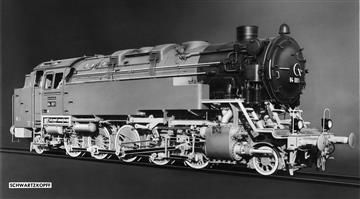
German Reichsbahn class 84
Germany

German Reichsbahn class 85
Germany
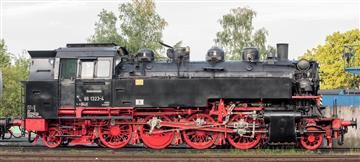
German Reichsbahn class 86
Germany
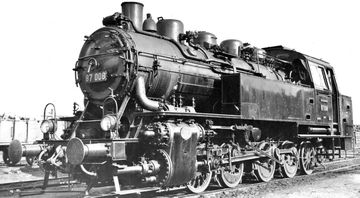
German Reichsbahn class 87
Germany

German Reichsbahn class 890
Germany
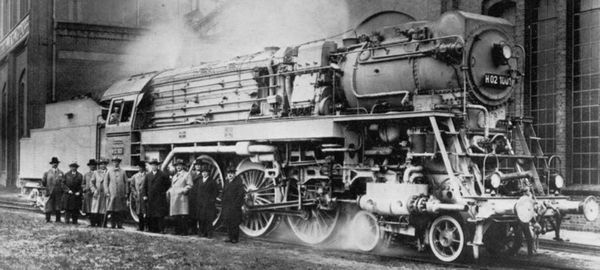
German Reichsbahn H 02 1001
Germany